
Greek baked sea bream (Tsipoura sto fourno)
This whole baked sea bream with lemon, garlic and herbs is an easy and delicious way to prepare a whole fish. The sea bream is seasoned simply with oregano, fresh thyme, garlic and lemon, then wrapped in parchment paper and foil and baked until tender and juicy. The flavourful juices collected in the packet are then combined with olive oil, lemon and oregano to make a simple sauce to serve with the fish.
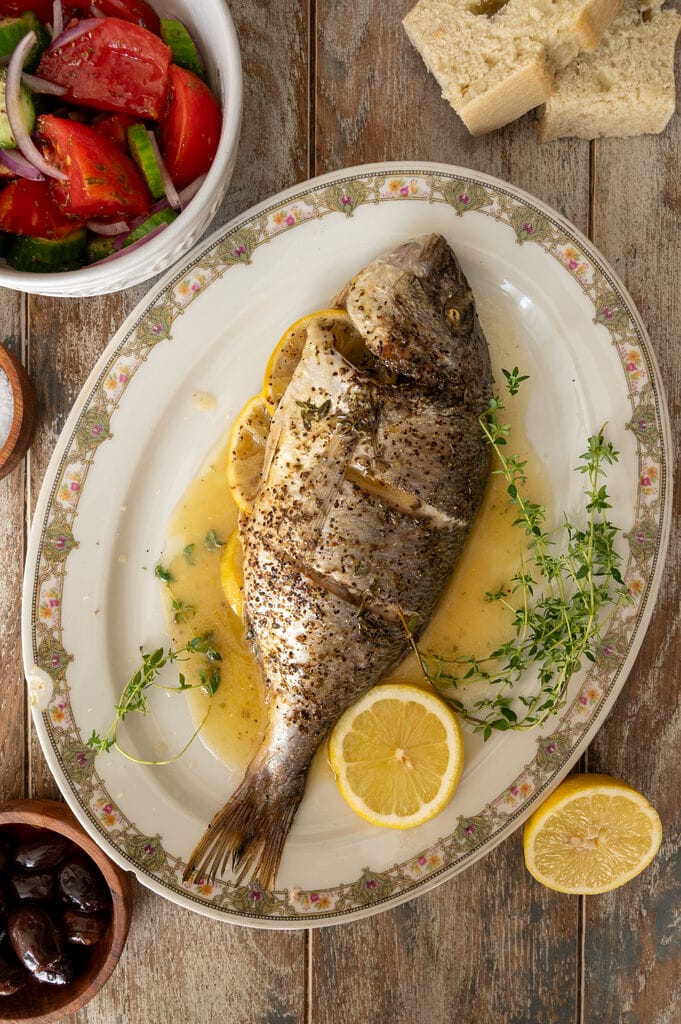
If the thought of cooking a whole fish intimidates you, this recipe is a great place to start. There is very little preparation involved, and cooking the fish wrapped in parchment helps keep it moist and tender. It also means that all of the delicious juices are captured instead of being lost in the baking pan. Added bonus…clean up is a breeze!
Growing up Greek, we ate fish often. Our parents had their favourite psaradiko (fish market) that they would go to, and they would always look for fish with glassy, fresh-looking eyes. That was their way of gauging how fresh the fish was. Of course, the trusted Greek fishmonger was also a reliable source! Among the fish that our parents would prepare were small fried fish that were eaten whole. When fresh fish was not available, they turned to salted cod, which was either served with skorkalia (garlic potato mash) or in a rich tomato sauce along with eggplants and potatoes. When they found fresh tsipoura (sea bream) it was often prepared very simply. When you start with a beautiful fresh fish, you really don’t need much. Olive oil, lemon, oregano, garlic and a few fresh herbs are enough to make it shine.
Why you’ll love this recipe
- It is incredibly easy. Once the fish is seasoned and wrapped, the oven does most of the work.
- The fish stays moist. Cooking the sea bream in parchment traps steam and prevents the delicate flesh from drying out.
- It uses simple ingredients. Lemon, olive oil, garlic, oregano and thyme are all you need.
- There is almost no cleanup. Everything cooks inside the parchment and foil packet.
- Nothing delicious goes to waste. The cooking juices are transformed into a wonderful lemon and olive oil sauce to spoon over the fish.
What is sea bream?
Sea bream is a mild, slightly sweet white fish that is very popular throughout Greece and the Mediterranean. It has firm but tender flesh and is particularly delicious when cooked whole.
In Greece, sea bream is known as tsipoura (τσιπούρα) and you will find it served everywhere from seaside tavernas to family dinner tables. It is often grilled or baked and served simply with lemon and olive oil.
Cooking sea bream whole also adds flavour and helps keep the flesh moist as it cooks.
Ingredients you will need
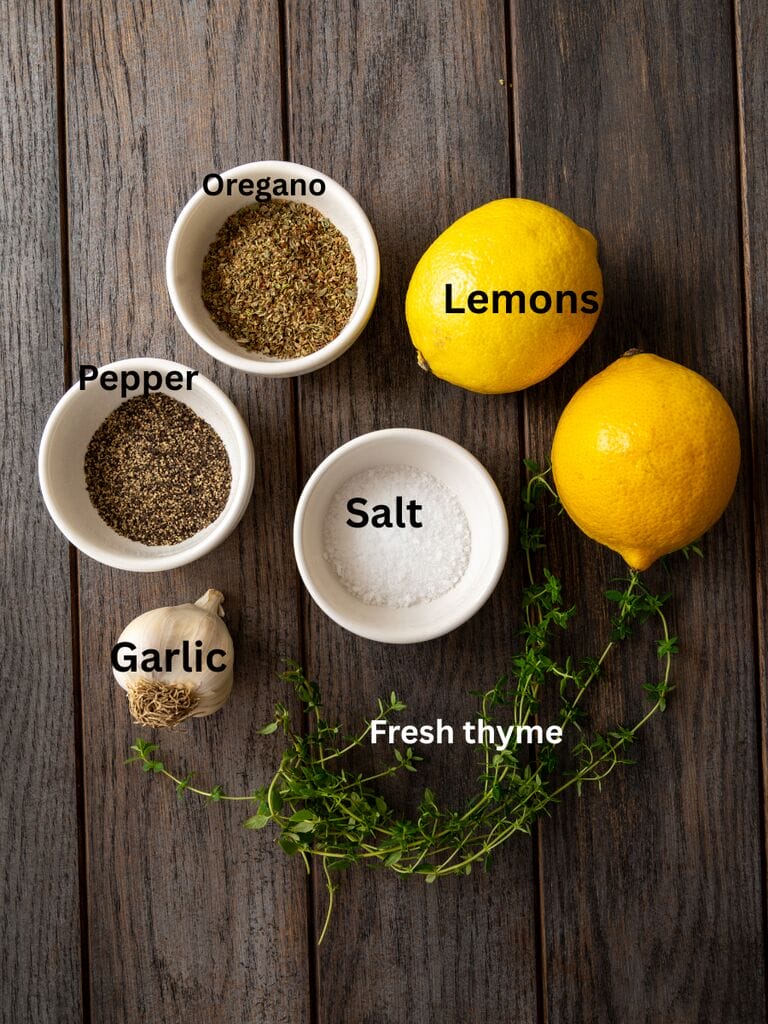
You only need a handful of simple ingredients to make this whole baked sea bream. As with so many Greek recipes, the combination of good olive oil, fresh lemon and herbs lets the flavour of the fish really shine.
Whole sea bream
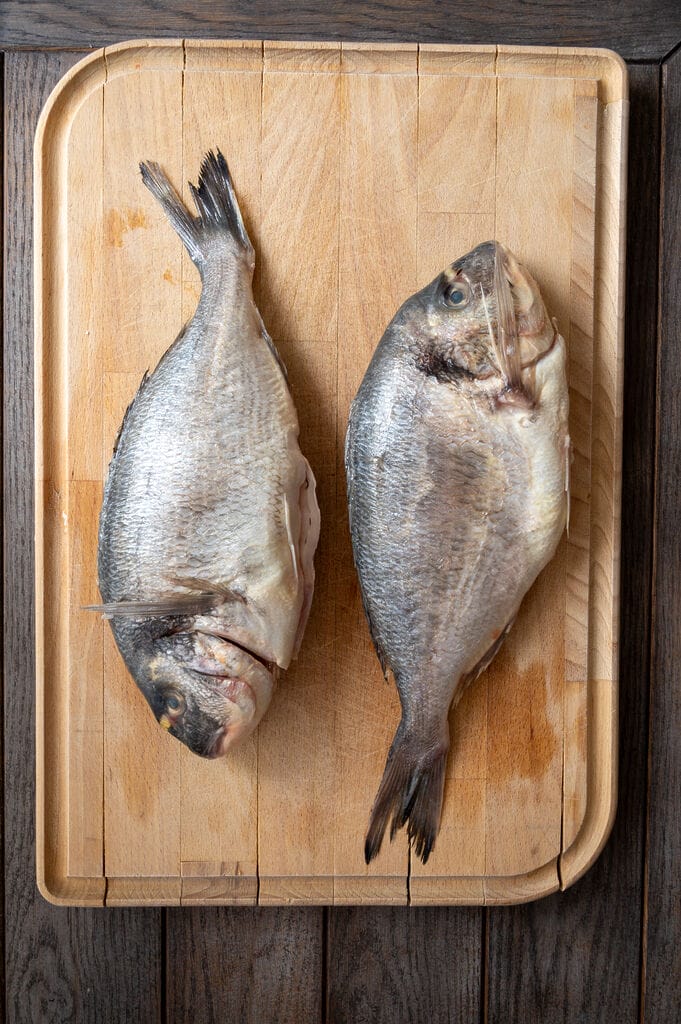
Also known as tsipoura (τσιπούρα) in Greek, sea bream has a mild, slightly sweet flavour and tender white flesh. Ask your fishmonger to clean, gut and scale the fish for you. We use a whole sea bream weighing approximately 500 grams.
Lemon
Fresh lemon is used in several ways in this recipe. Slices are placed underneath and inside the fish, fresh lemon juice is squeezed over the fish before baking, and more is added to the cooking juices to make the finishing sauce.
Garlic
Thin slices of garlic are tucked inside the cavity of the fish, where they gently flavour the sea bream as it cooks. We don’t use too much because we don’t want to overpower the delicate flavour of the fish.
Dried oregano
It wouldn’t be a Greek fish recipe without oregano! It adds its characteristic earthy flavour to both the sea bream and the lemon and olive oil sauce served with it.
Fresh thyme
Fresh thyme has a subtle herbal flavour that works beautifully with fish. We use both fresh thyme leaves to season the sea bream and whole sprigs tucked inside the cavity.
Olive oil
Use a good-quality extra virgin olive oil. It adds richness and flavour to the fish and is also combined with the reserved cooking juices and lemon to make the sauce for serving.
Salt and black pepper
Simple seasonings are all that fresh sea bream really needs. Be sure to season both the outside and the cavity of the fish so that it is flavourful throughout.
How to make whole baked sea bream
Preheat your oven to 375°F (190°C).
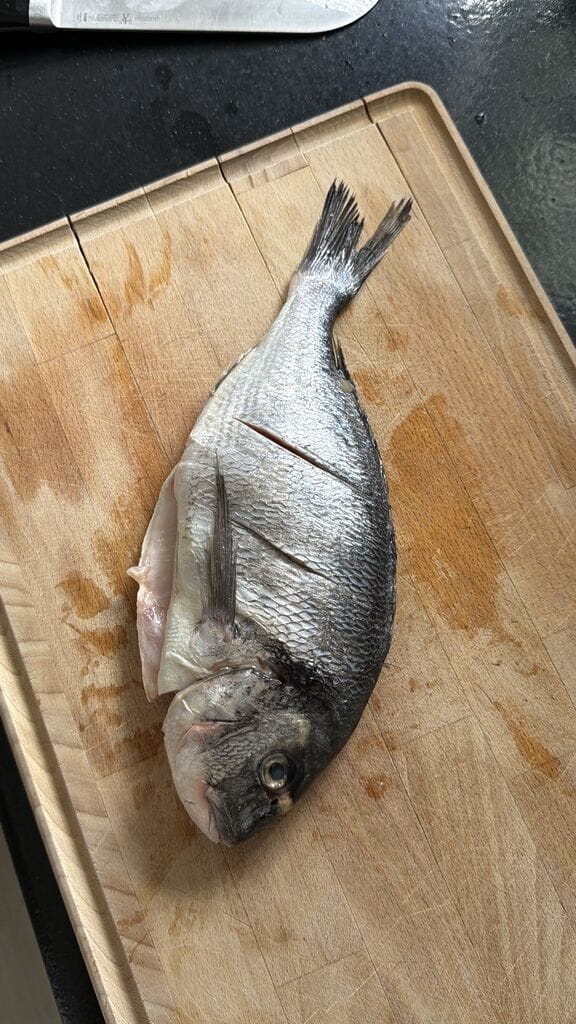
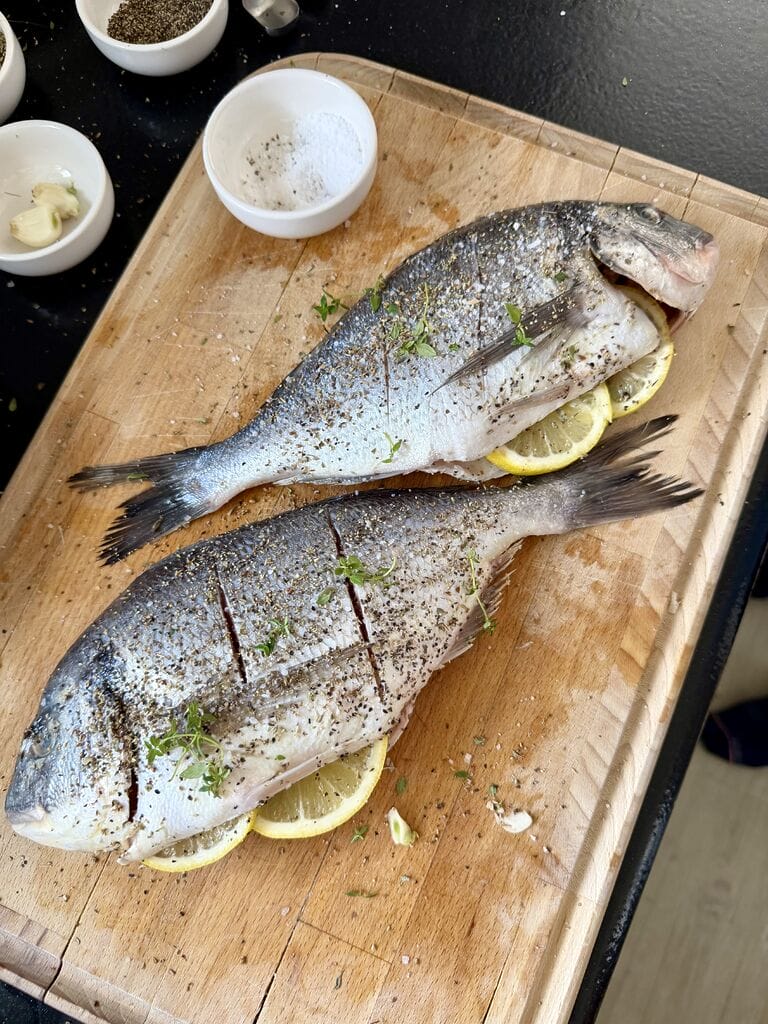
Pat your sea bream dry with paper towels. If your fishmonger has not already done so, make 2 or 3 shallow diagonal slits on each side of the fish. These help the seasonings penetrate the flesh.
Season the fish inside and out, including inside the slits, with the oregano, salt, pepper and fresh thyme leaves.
Place the sliced garlic, 2 thin slices of lemon and the fresh thyme sprigs inside the cavity of the fish.
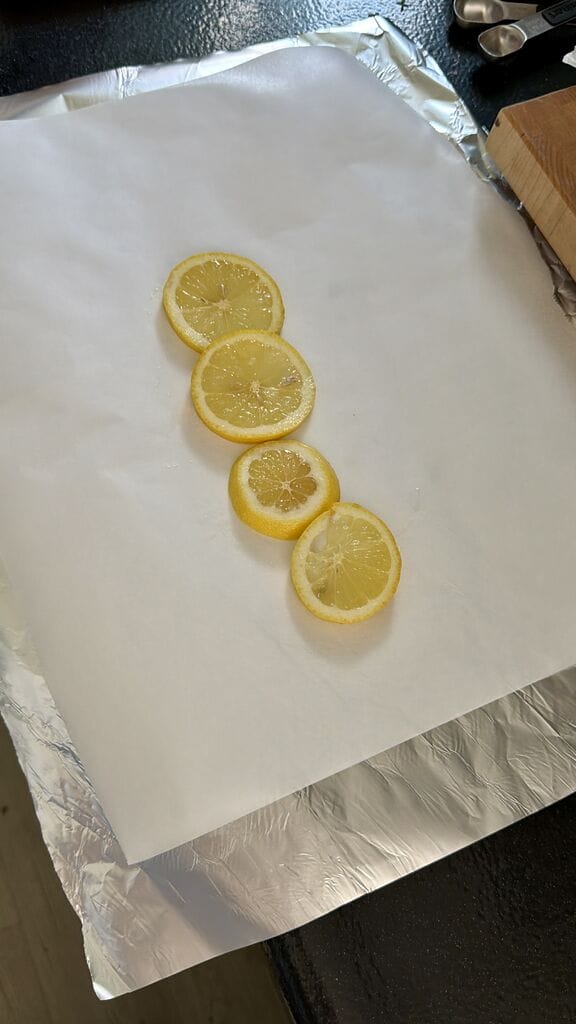
Place a large sheet of aluminum foil on your work surface. Lay a piece of parchment paper over the foil. The parchment should be large enough to wrap comfortably around your fish.
Arrange 3 or 4 thin lemon slices on the parchment paper and place the sea bream directly on top of the lemon slices.
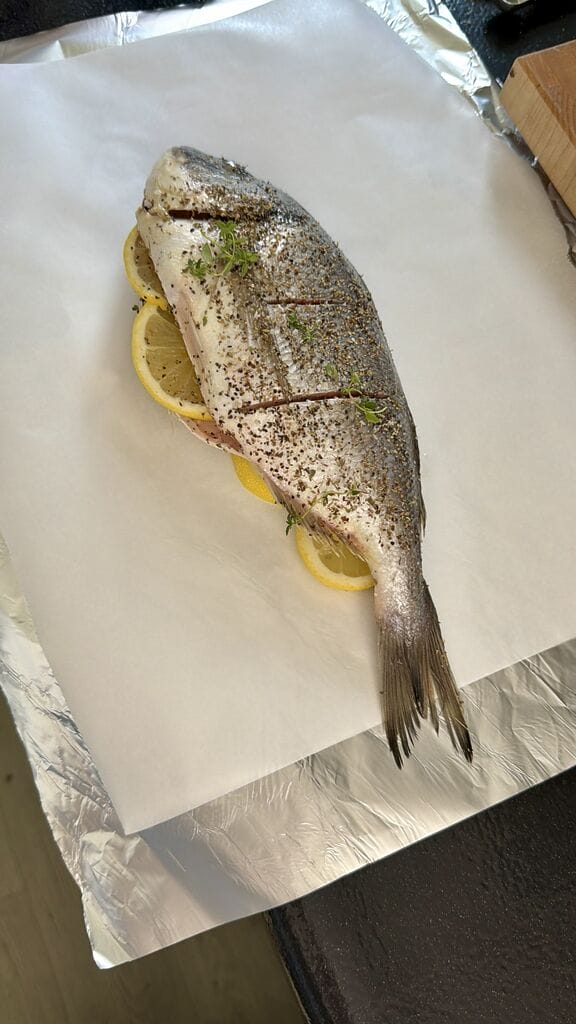
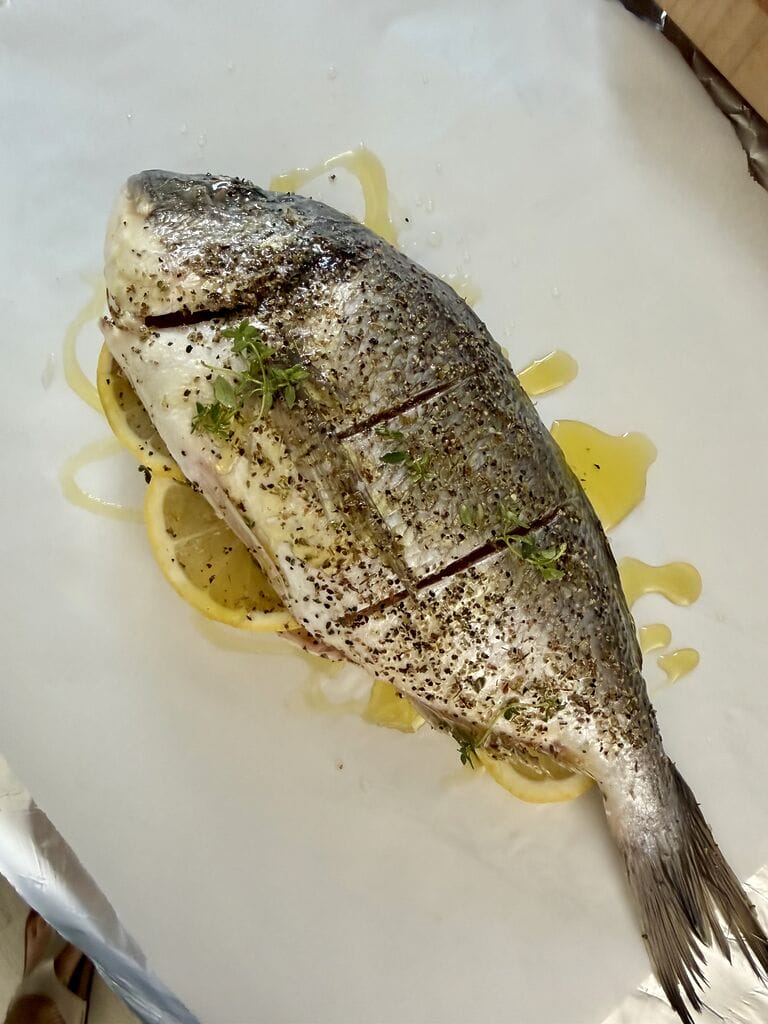
Drizzle the fish with the olive oil and squeeze approximately 2 teaspoons of fresh lemon juice over the top.
Bring the parchment paper up around the fish and then use the aluminum foil to wrap and seal the entire package securely.
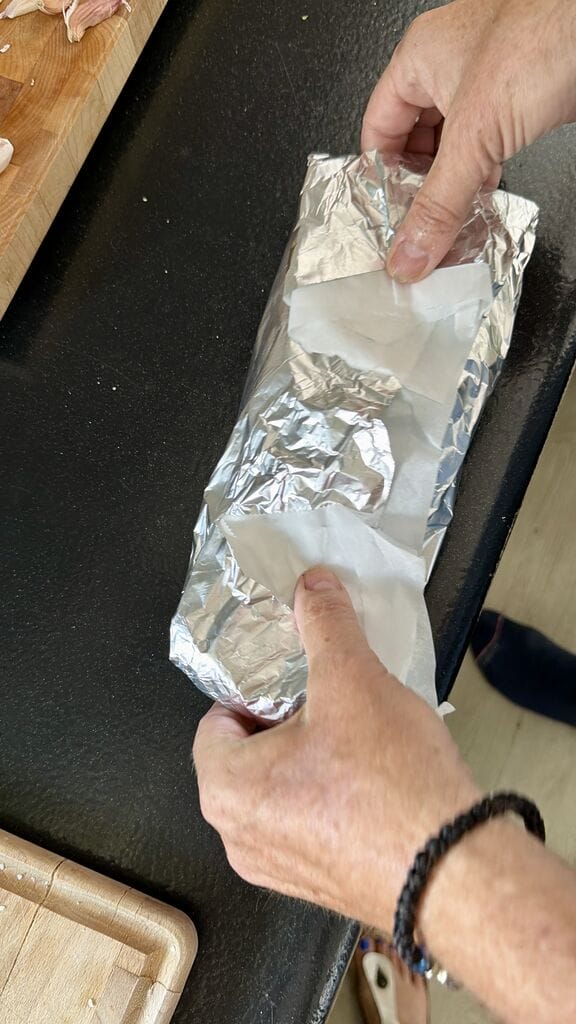
Transfer the packet to a baking sheet and bake in the centre of your oven for 25 to 30 minutes.
Carefully open the foil and parchment packet, being mindful of the hot steam. Leave the packet open so that the top of the fish is exposed.
Return the fish to the oven for another 5 to 7 minutes, or until the fish is cooked through and the skin has taken on a little colour.
If you would like a little more browning, place the fish under the broiler briefly at the end of cooking. Keep a close eye on it.
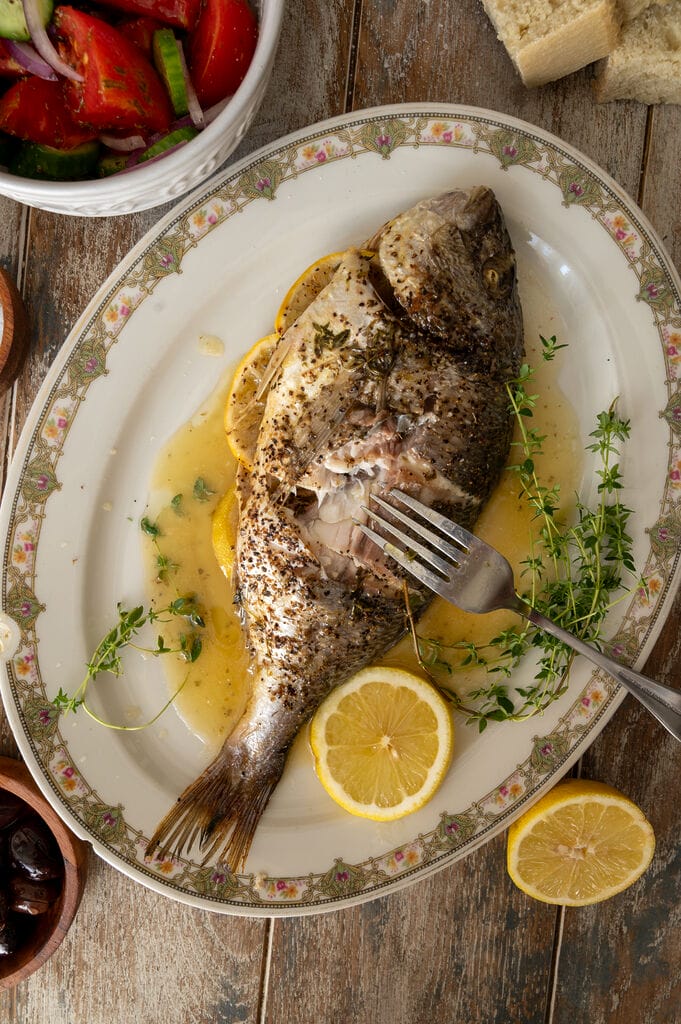
The fish is ready when the flesh is opaque and separates easily from the backbone. If you use an instant-read thermometer, the thickest part of the fish should reach 145°F (63°C).
Don’t throw away the juices!
This may be our favourite part of the recipe!
When you open your packet, you will find a wonderful collection of juices underneath the fish. They are full of flavour from the sea bream, lemon, garlic, thyme and oregano, so definitely don’t throw them away.
Carefully transfer the fish to a serving platter and pour all of the liquid remaining in the parchment into a small jar.
Add 1 tablespoon olive oil, 1 1/2 teaspoons fresh lemon juice and 1/4 teaspoon oregano. Cover the jar and shake vigorously until everything is combined.
Taste and add a little more lemon if you like.
Spoon this delicious sauce generously over the fish when serving.
Recipe tips
Ask your fishmonger to clean the fish for you. Your sea bream should be gutted, scaled and cleaned before you cook it. This makes preparing a whole fish at home incredibly easy.
Don’t skip the parchment paper. We like using both parchment and foil. The fish and lemon are in contact with the parchment, while the foil on the outside makes it easy to create a tightly sealed packet.
Don’t overcook your fish. A whole sea bream weighing approximately 500 grams does not need long in the oven. Start checking it after about 25 minutes.
Be careful when opening the packet. A significant amount of hot steam can accumulate inside, so open the parchment away from your face and hands.
Save every drop of the cooking liquid. It makes an incredibly flavourful base for the finishing sauce.
Substitutions and variations
Can I use another fish?
Absolutely. This method works well with other whole fish of a similar size. Branzino (European sea bass), snapper and other whole Mediterranean-style fish are good options.
The cooking time will depend on the type, weight and thickness of your fish, so adjust accordingly.
Can I use only oregano?
Yes. We love the combination of fresh thyme and oregano, but if you don’t have fresh thyme you can leave it out. Lemon, oregano, garlic and olive oil alone will still give your fish plenty of flavour. You can also use some dried thyme if that is what you have, just use about 1/2 the amount of fresh.
Can I add more garlic?
Of course! We use one clove because we don’t want the garlic to overpower the delicate sea bream, but garlic lovers can certainly add another clove.
How to serve whole baked sea bream
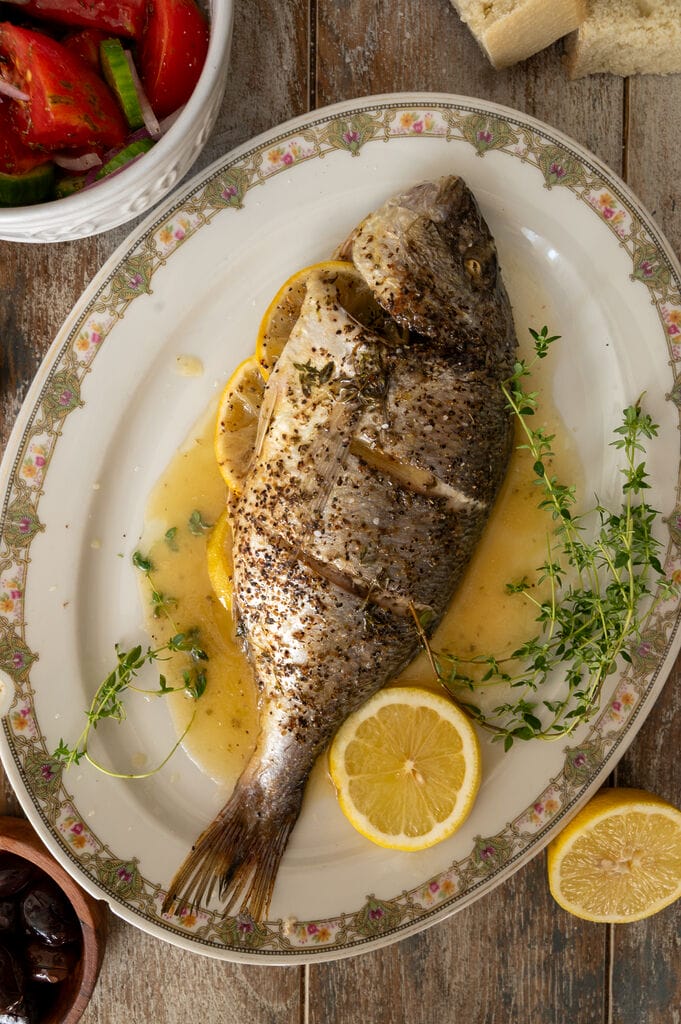
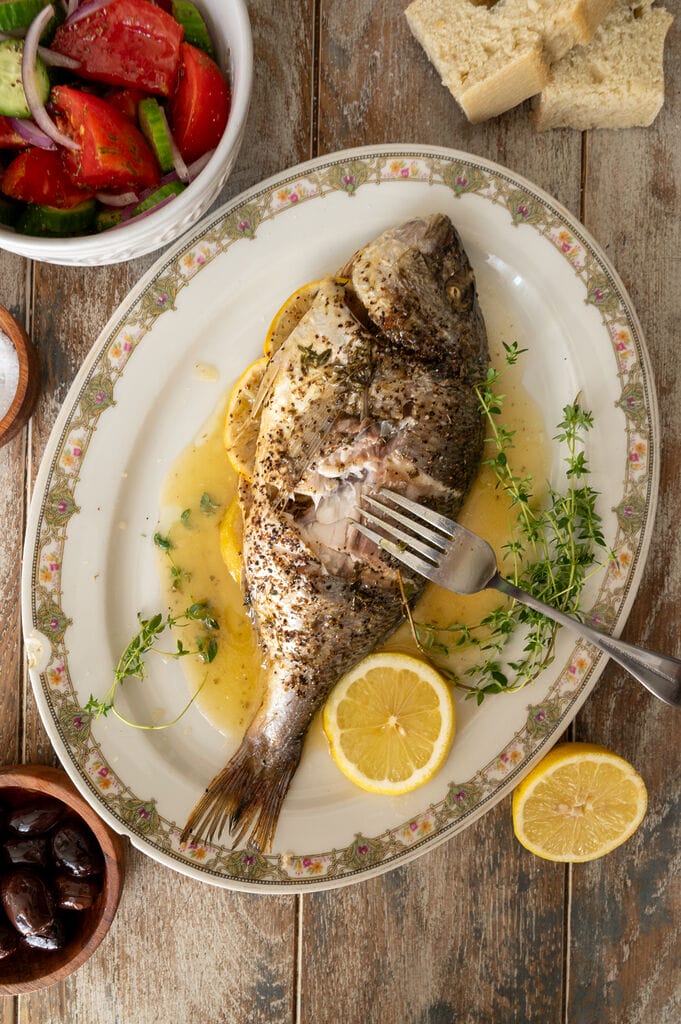
We love bringing the whole fish to the table on a large platter, surrounded by fresh lemon wedges. It makes a beautiful presentation and everyone can help themselves.
For a very Greek meal, serve your sea bream with lemon roasted potatoes, horta, a Greek village salad (horiatiki) or a simple green salad.
And be sure to bring that extra lemon and olive oil sauce to the table. You’ll want some with every bite.
Frequently asked questions
Do you have to wrap the fish in both parchment paper and foil?
The parchment creates a barrier between the food and the aluminum foil, while the foil makes it much easier to seal the packet tightly. Together they trap the steam and cooking juices beautifully, so using both parchment paper and foil is strongly recommended!
How do I know when a whole sea bream is cooked?
The flesh should have changed from translucent to opaque and should separate easily from the backbone. An instant-read thermometer inserted into the thickest part of the fish should register 145°F (63°C).
Do you eat the skin of sea bream?
Yes, the skin is edible. Because this fish spends most of its cooking time wrapped in parchment, the skin will be tender rather than very crispy. Opening the packet for the final few minutes helps dry and lightly brown it.
How much whole sea bream should I serve per person?
A 500 gram whole sea bream is generally a good amount for two people when served with side dishes. Remember that some of the weight comes from the head and bones.
Can I prepare the fish ahead of time?
You can clean and season the fish and prepare your other ingredients ahead of time, but we prefer adding the lemon and wrapping the fish shortly before baking. Fresh fish is also at its best when cooked and served right away.
Storage
Whole baked sea bream is best enjoyed immediately after cooking.
If you have leftovers, remove the flesh from the bones and store it in an airtight container in the refrigerator for up to 2 days. Leftover fish is delicious served cold or gently reheated, although reheating it too aggressively can dry it out.
Related recipes
If you love this recipe for whole baked sea bream, then I think you will also love these fish recipes:
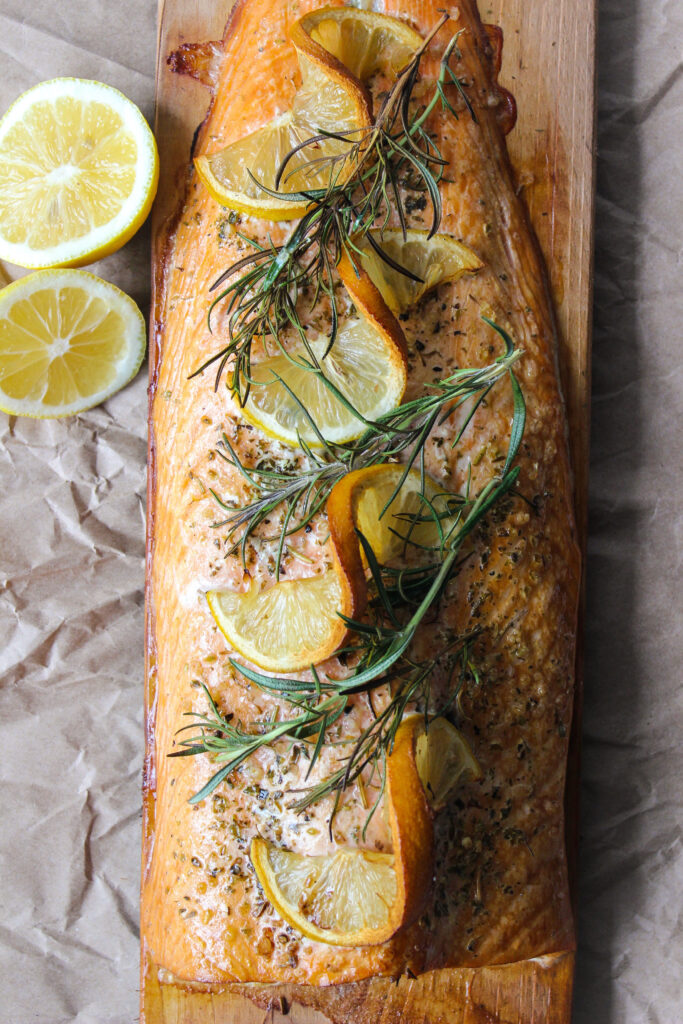
Cedar planked salmon
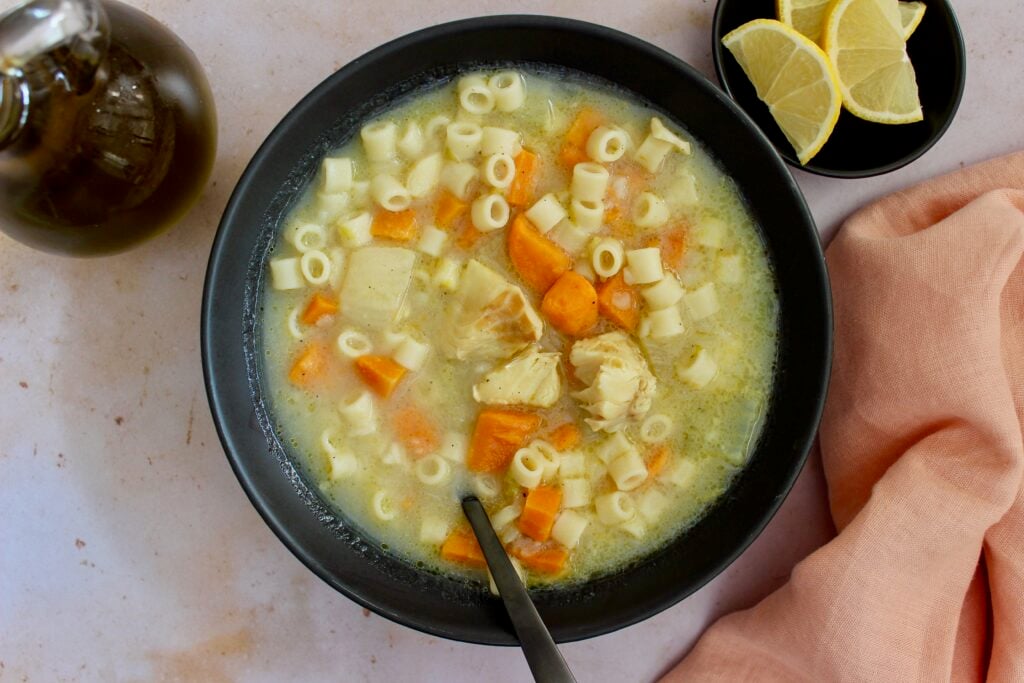
Fish Soup (Ψαρόσουπα)

Fried fish (Ψαράκια τηγανητά)
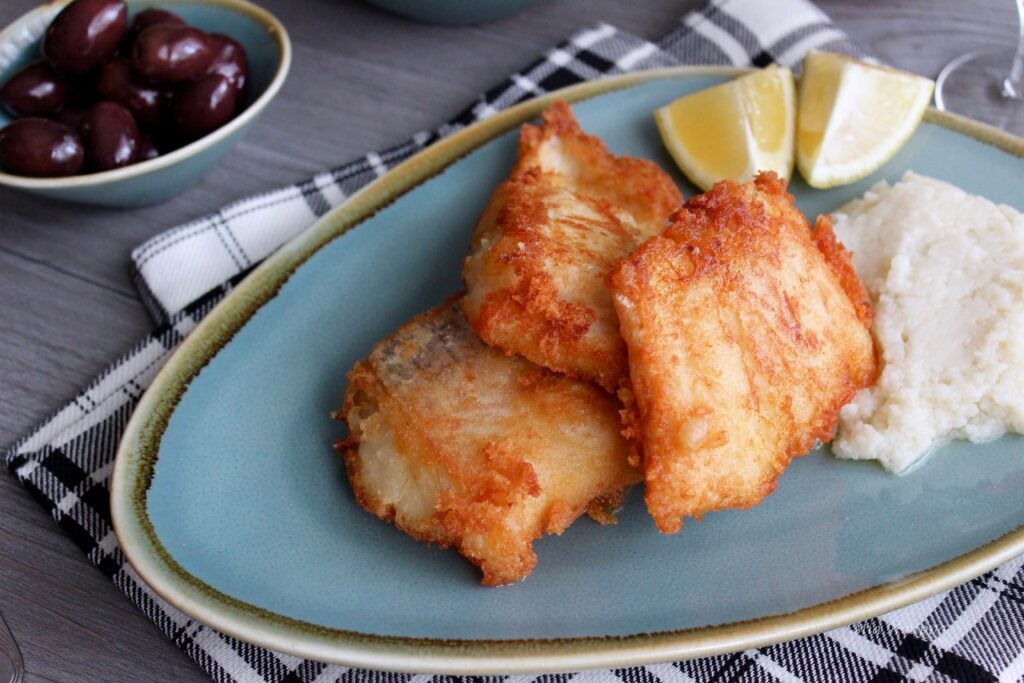
Cod and skordalia (Μπακαλιάρος και σκορδαλιά)
A simple Greek way to enjoy whole fish
There is something so satisfying about bringing a whole fish to the table. It looks impressive, but this recipe proves that preparing one doesn’t have to be complicated.
A beautiful fresh sea bream, good olive oil, fresh lemon, garlic and herbs really are all you need. Baking everything together in parchment keeps the fish tender and captures all those wonderful juices—and turning those juices into a lemony olive oil sauce means not a bit of flavour goes to waste.
Kali orexi!
Recipe
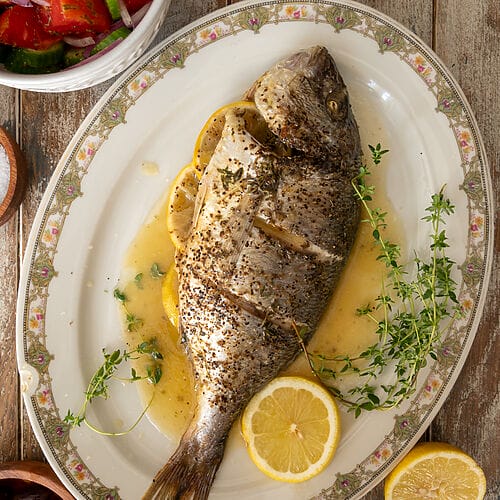
Greek oven baked sea bream (Tsipoura sto fourno)
Ingredients
- 1 sea bream (approximately 500 grams) cleaned and scaled
- ½ tsp dried Greek oregano
- ½ tsp salt
- ¼ tsp black pepper
- 1 tsp fresh thyme leaves
- 3 – 4 sprigs fresh thyme
- 1 garlic clove, thinly sliced
- 1 lemon sliced and 1 tbsp lemon juice reserved (plus an additional 1½ tsp for serving)
- 1½ tbsp olive oil
To serve
- Reserved juices from the cooked fish
- 1 tbsp olive oil
- 1½ tsp lemon juice
- ¼ tsp dried Greek oregano
Instructions
- Pat the sea bream dry. Make 2–3 shallow diagonal slits on each side if your fishmonger hasn't already done so.1 sea bream
- Season the fish inside and out, including inside the slits, with the oregano, salt, pepper and fresh thyme leaves.½ tsp dried Greek oregano, ½ tsp salt, ¼ tsp black pepper, 1 tsp fresh thyme leaves
- Place the sliced garlic, 2 thin lemon slices and the thyme sprigs inside the cavity.3 – 4 sprigs fresh thyme, 1 lemon, 1 garlic clove, thinly sliced
- Lay a large piece of aluminum foil on your work surface and place a sheet of parchment paper over it. Arrange 3–4 thin lemon slices on the parchment and place the fish on top.
- Drizzle the fish with olive oil and squeeze about 2 teaspoons fresh lemon juice over it.1½ tbsp olive oil
- Fold the parchment around the fish and then seal everything securely with the foil. Place the packet on a baking sheet.
- Bake in the centre of a 375°F (190°C) oven for 25–30 minutes.
- Carefully open the packet so that the top of the fish is exposed. Return it to the oven for another 5–7 minutes, until the fish is cooked through and the skin has taken on a little colour. If you want the skin more browned, you can broil it briefly at the end.
- Carefully transfer the fish to a serving platter, reserving all of those wonderful juices in the parchment.
- Pour the cooking juices into a small jar. Add olive oil, lemon juice and oregano. Close the jar and shake vigorously until the sauce is emulsified. Taste and adjust the lemon if necessary.Reserved juices from the cooked fish, 1 tbsp olive oil, 1½ tsp lemon juice, ¼ tsp dried Greek oregano
- Pour the sauce over the fish just before serving.