
Baklava Recipe (Μπακλαβάς)
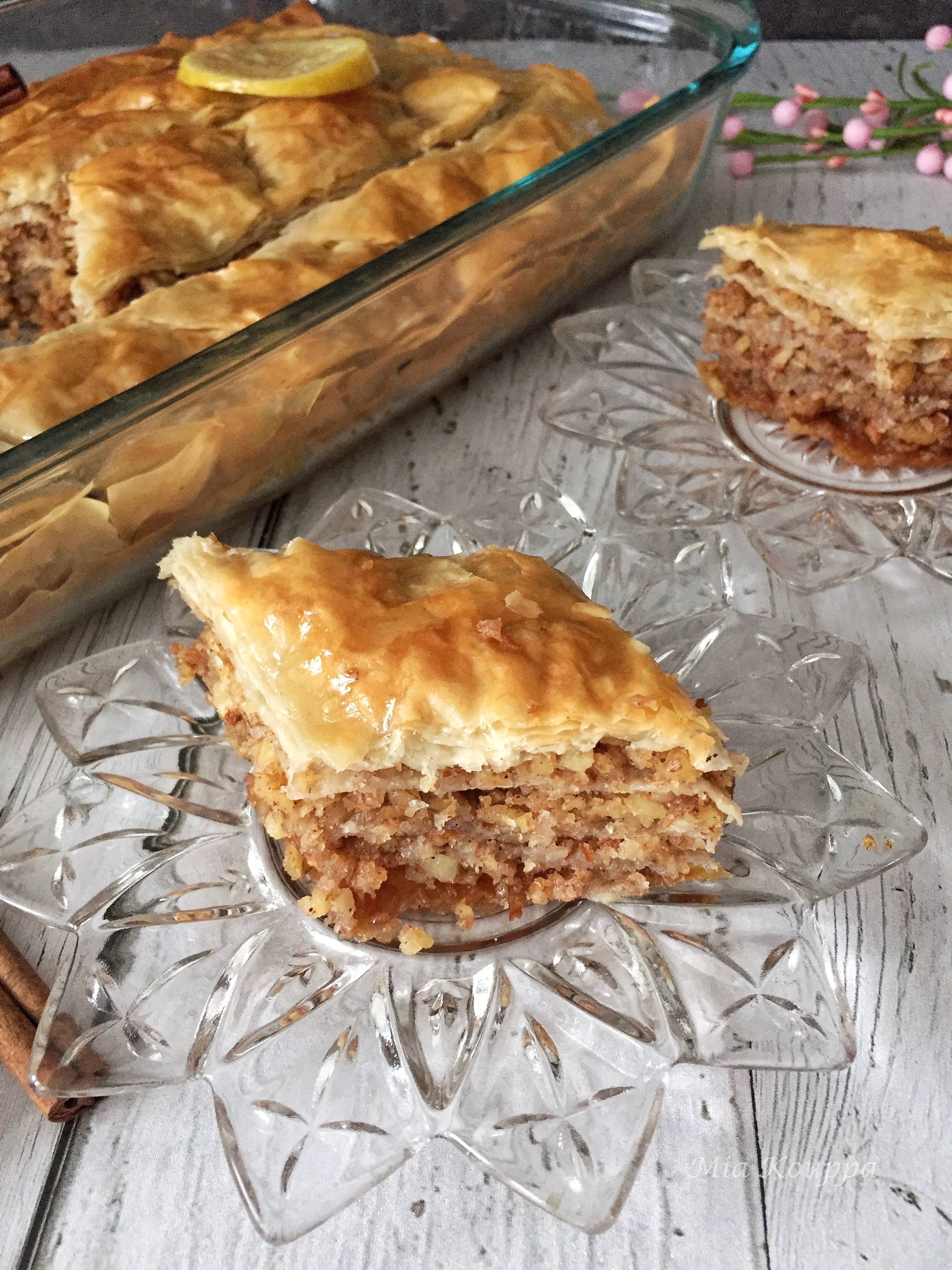
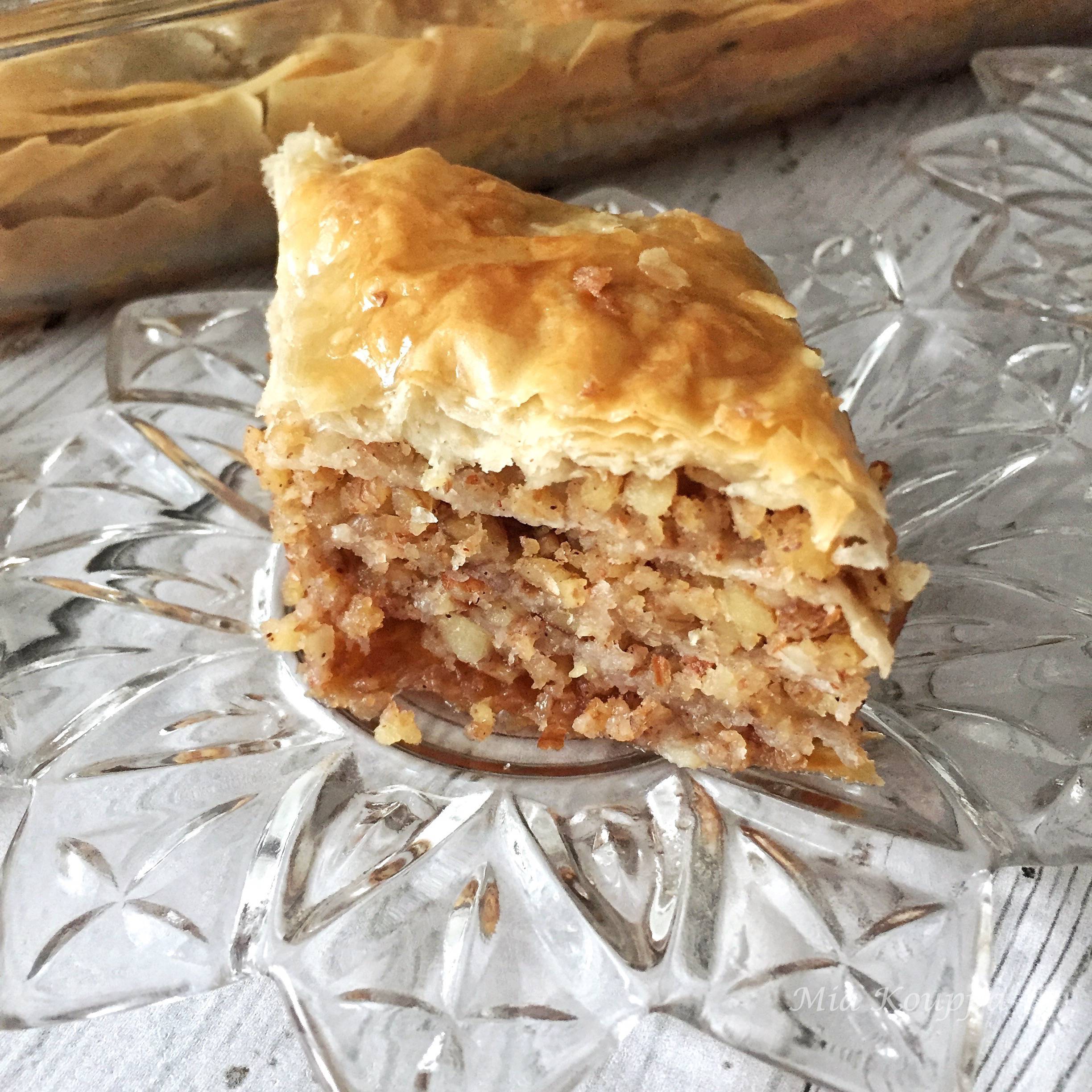
Baklava is a classic Greek syrupy dessert made with layers of crispy phyllo and lots of nuts! This recipes uses a combination of almonds and walnuts and many layers of thin phyllo dough. The dessert is soaked in a honey and sugar syrup that is flavoured with lemon and cinnamon.
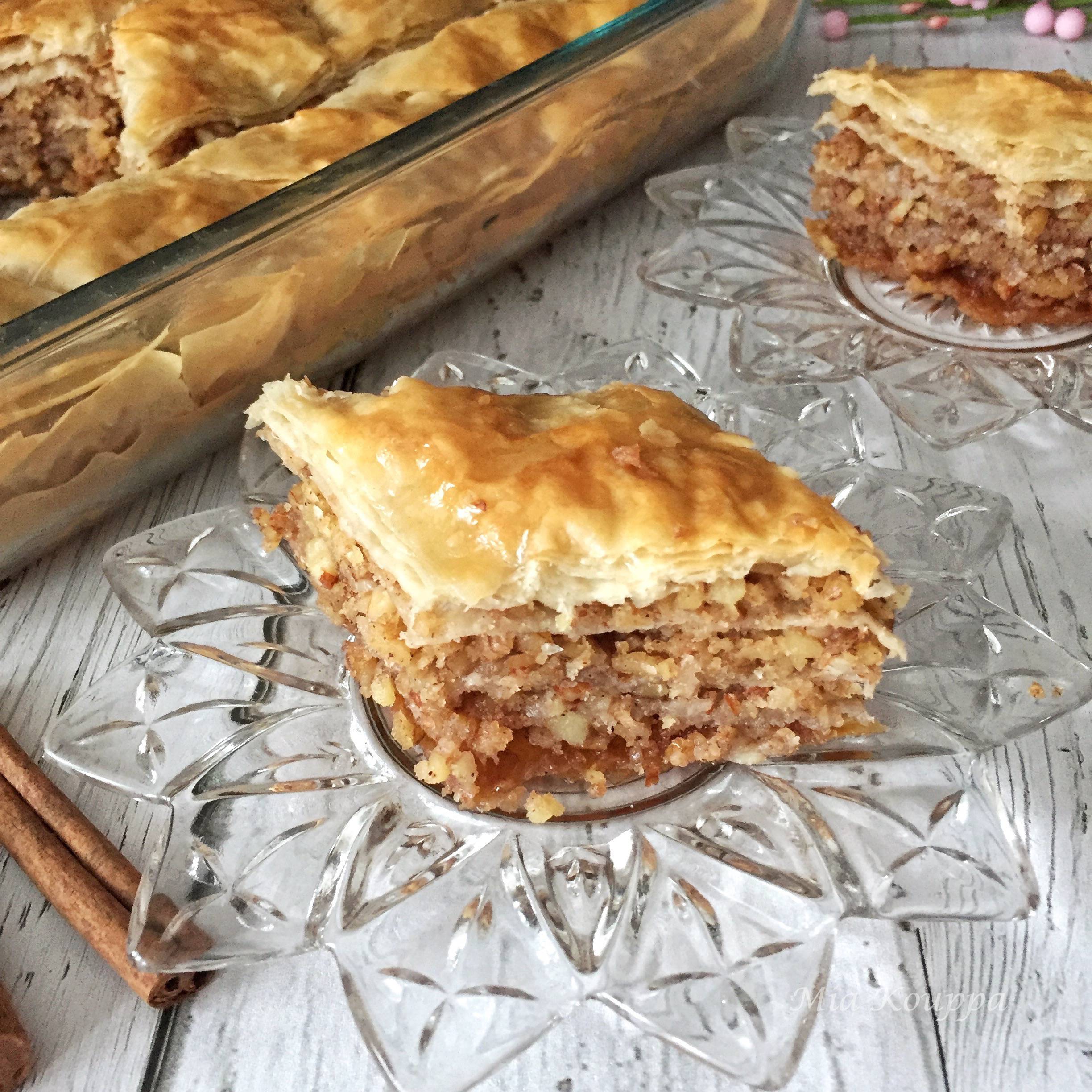
Growing up in a Greek home, dessert was often one soaked in syrup! In fact, there is a whole class of desserts which are called siropiasta, which literally translates to syrup-soaked. These rich, sticky and delicious desserts include things like galaktoboureko, portokalopita, saragli, revani with coconut and of course the classic baklava. You can read more about these amazing desserts in this post All about Siropiasta, or Greek desserts with syrup.
Everyone knows and loves baklava! It is a popular dessert in Greek and Middle Eastern restaurants and it is actually really easy to make at home. There is no batter to worry about, no fear that your cake won’t rise. Making baklava is as simple as layering purchased phyllo dough, buttering between the layers, and sprinkling a nut mixture between them. Nothing could be simpler, and some would argue, nothing is more delicious!
Why this recipe works
Baklava is one of the most popular and delicious Greek desserts, and it is also an international favourite; there are variations of this sweet treat in many middle Eastern and European countries. Lucky for all of us, baklava may be the easiest dessert you will ever make. Truly, there is actually no way you can mess this up. Even if you tried, I don’t think you could ruin it. It is impervious to destruction. It is less baking and more assembling. If you were really committed, I suppose you could burn it, but then you might burn down your whole kitchen, and I don’t think it is worth it, just to prove me wrong.
When Helen and I first launched Mia Kouppa we established a few goals and rules to keep us focused, and on track. Our goals included increasing our reach (that’s blog speak for people seeing our stuff) every week, learning all about Instagram and Pinterest, and being invited to appear on Ellen. Some goals were clearly more attainable than others. As for the rules, we decided that we would post twice a week (Mondays and Thursdays), not talk about our blog incessantly to friends, family and strangers, and never use the descriptors “THE BEST ever”, “THE MOST delicious”, “THE WORLD’S greatest”, in reference to any recipes we shared. How could we make such bold assertions? We are not that worldly…but baklava is!
Given the many, many variations of baklava out there, and our pre-established rules, I’m not going to tell you that this recipe, which originates with my parents, is the best you will every find. I will not claim that this will be the best baklava you will ever eat. But I can, with confidence, tell you that this is the absolute best baklava my family and I have ever eaten; and we have tried many (for research purposes, of course). My parents make a baklava which is sweet, but not overly syrupy. They use a mixture of walnuts and almonds to give great flavour and texture. They also include an unexpected ingredient which, according to them, is essential. Yet still, I wouldn’t dream of proclaiming that this is the world’s best recipe. There is no rule however, about other people claiming this to be THE BEST BAKLAVA EVER…so go ahead. I won’t mind.
Key ingredients
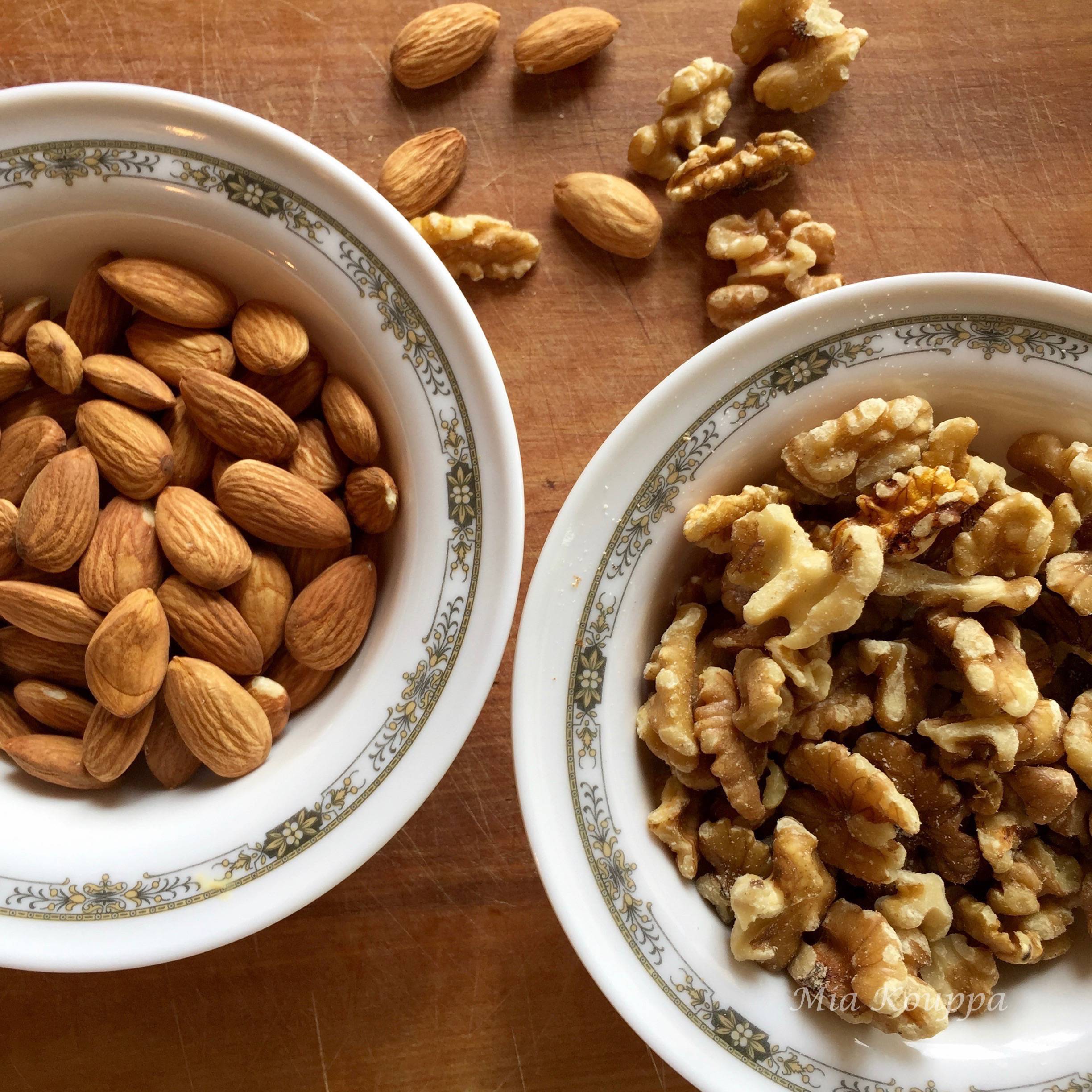
Crushed almonds I start with whole almonds and I like to leave the skin on because, like I said, making baklava is easy! Also, the skin adds a bit of flavour and colour to the mix.
Crushed walnuts I use walnut halves that I chop up myself.
Breadcrumbs I use plain breadcrumbs. I usually purchase my breadcrumbs but you can definitely make your own my whizzing some stale bread in a food processor. You can also use a mortar and pestle like my dad does to grind up stale bread.
Ground cinnamon I love the flavour of cinnamon and for me, it is an essential ingredients in baklava.
Unsalted butter I use unsalted butter so that I can control the amount of salt I use in my recipes.
Phyllo dough I use fresh phyllo dough whenever possible as I find it easier to work with than phyllo that has been frozen. There are often a variety of thicknesses available. I like to use the thinner variety to make baklava as I find this gives a crispier texture.
Salt I always add some salt to baked goods.
For the syrup
Sugar White granulated sugar is used to sweet the syrup.
Water Regular tap water works just fine in most place! Use bottled if you have to.
Honey Whenever possible I use either Greek or locally sourced honey.
Lemon juice & lemon slice The lemon flavour adds brightness to the syrup.
Cinnamon stick Using a cinnamon stick in the syrup is much better than using ground cinnamon because it does not change the colour of the syrup.
Recipe substitutions
You can use different nuts in your baklava. Some people like to use pistachios, and you can even use pecans or hazelnuts for something different. Use whatever nuts you have, and like, if you want to experiment. Be sure to use the same amount of nuts however. In my humble opinion though, almonds and walnuts are the best 😉
You can use orange juice and an orange slice in the syrup instead of lemon. You can also add more aromatics to the syrup. Things like cardamon pods, star anise and vanilla beans would be lovely!
You can probably omit the breadcrumbs if you don’t want to include them in the recipe.
Keep this recipe vegan by substituting the butter for a non-dairy margarine or olive oil. If you are a vegan who avoids honey, skip it in the syrup and use sugar instead.
How to make baklava
Prepare your syrup
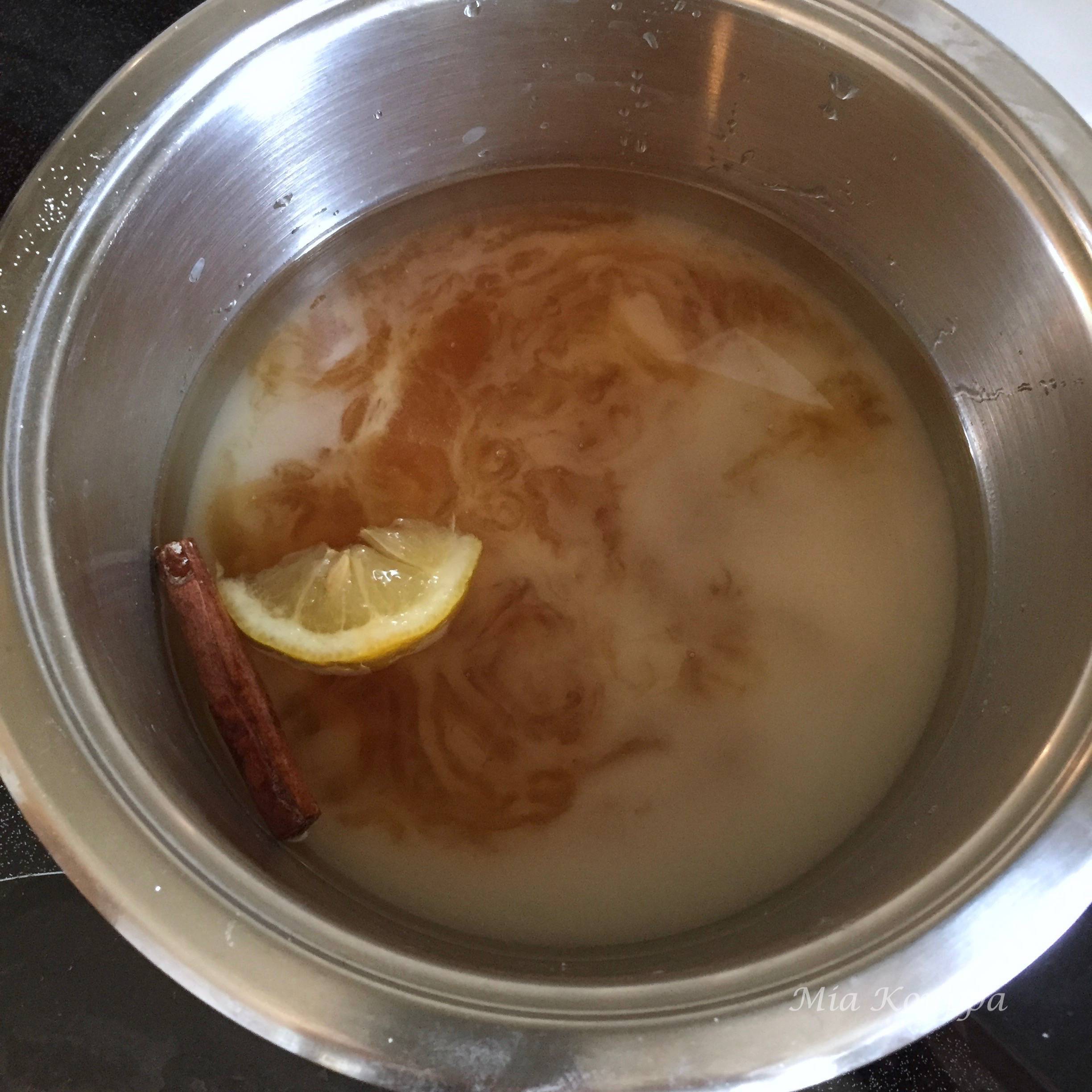
Bring to a boil the sugar, water, honey, lemon juice, lemon slice and cinnamon stick. Lower heat and cook just until sugar melts, stirring occasionally. Remove from heat and allow to cool completely.
Prepare your baklava
Step 1
Preheat oven to 350 °F.
Step 2
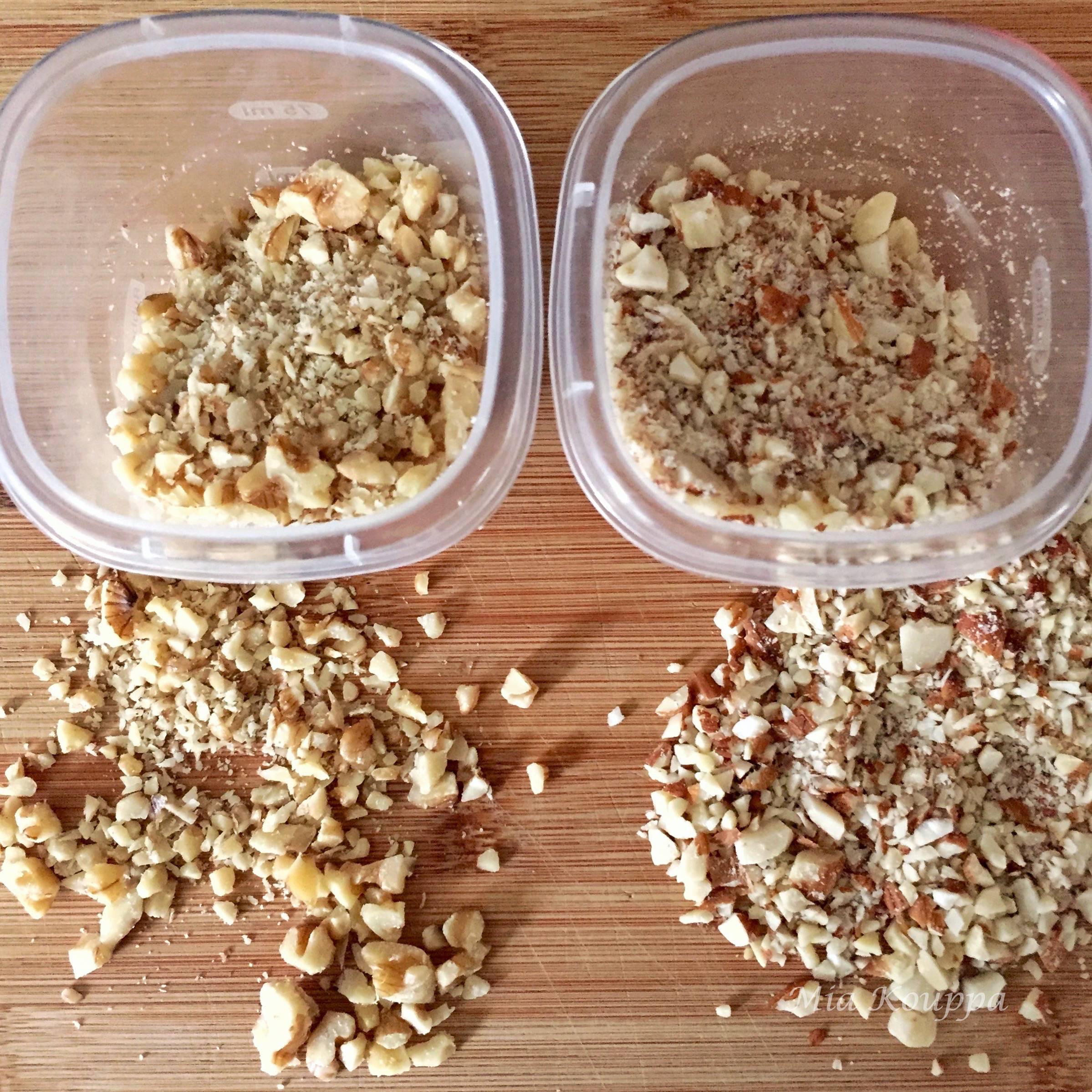
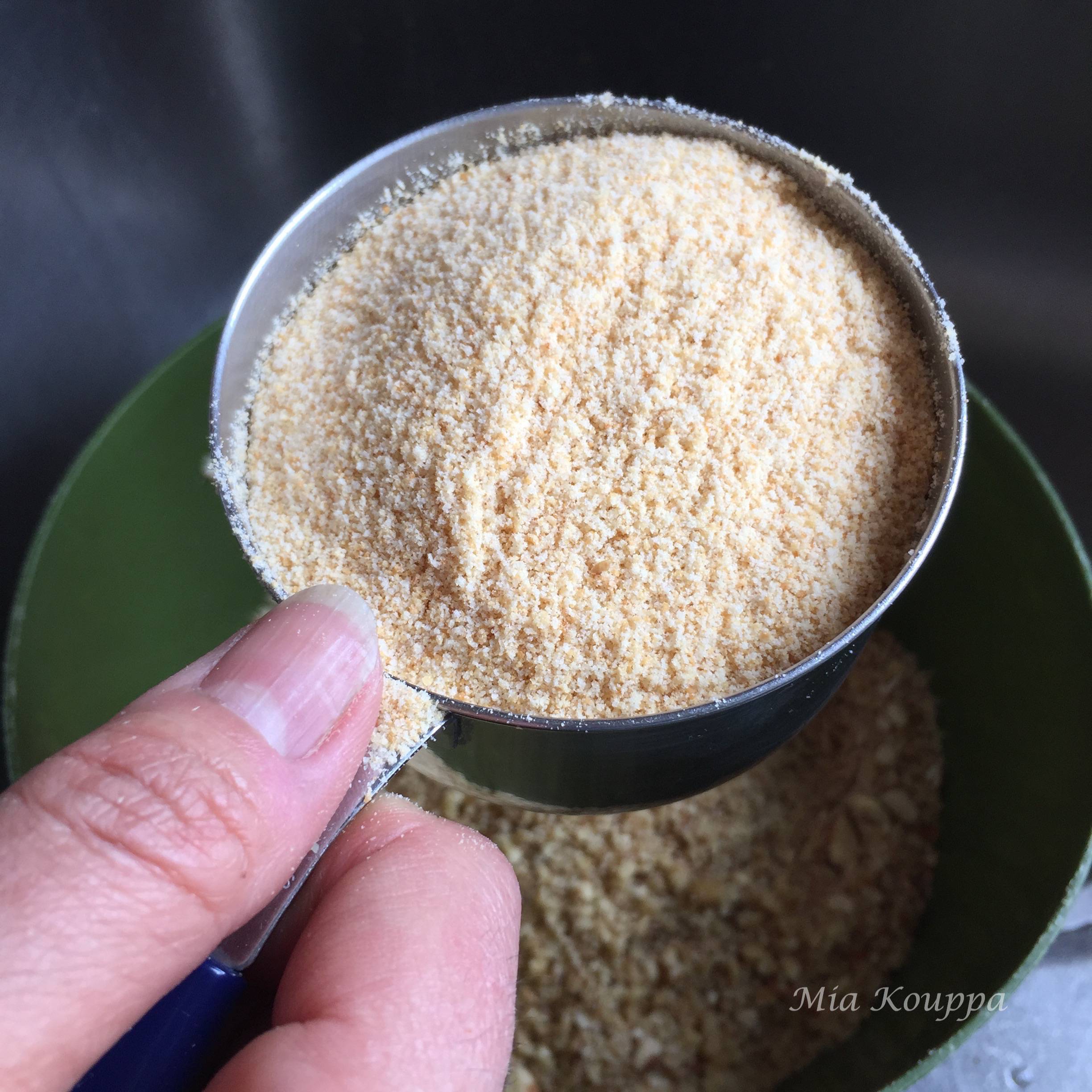
Chop your nuts using a food processor or a large knife. You want to end up with a variety of textures; finely ground nuts and larger chunks (see photo below). Combine in a large bowl the chopped almonds, chopped walnuts, breadcrumbs, ground cinnamon, salt and melted butter. Stir well to combine. Set aside.
Step 3
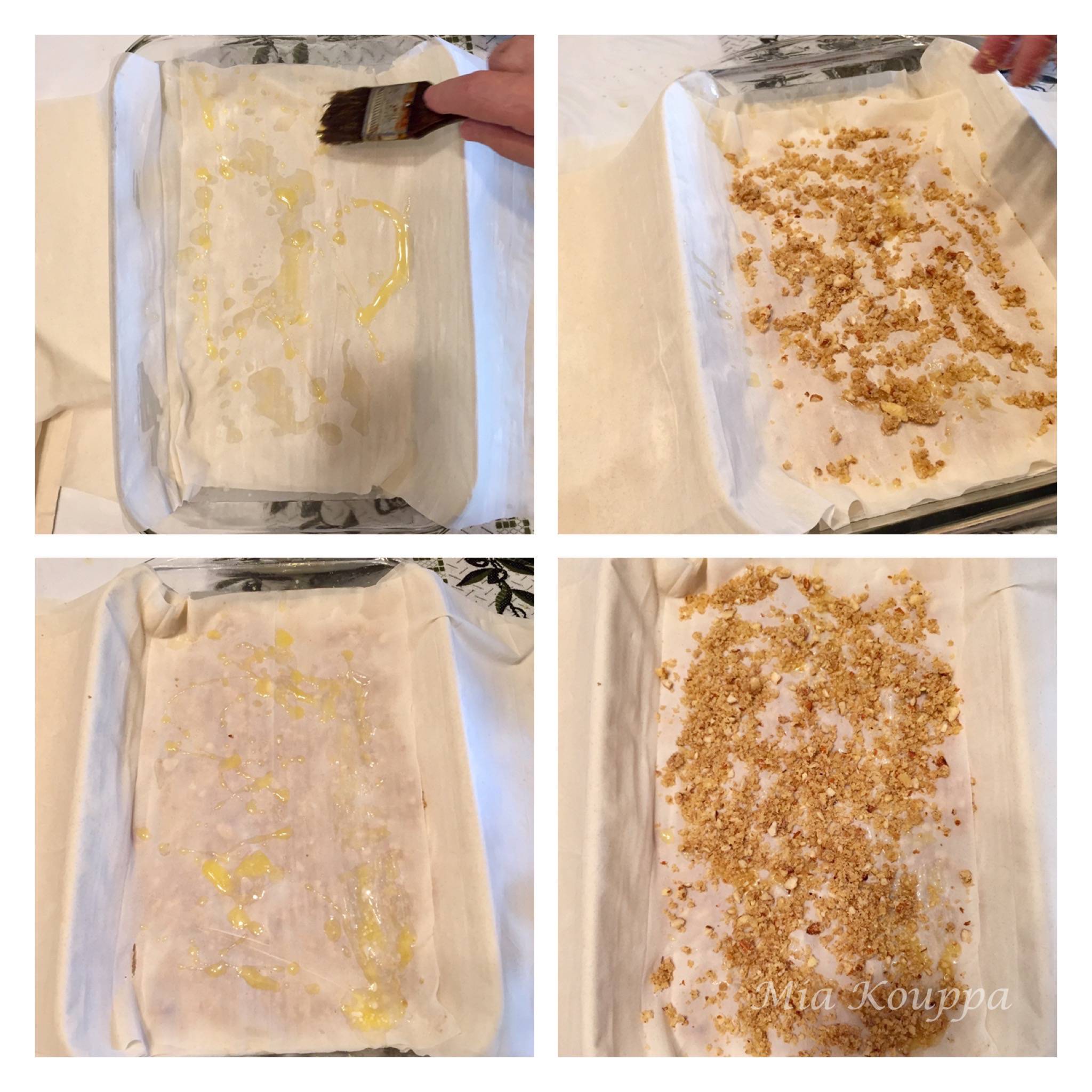
Butter the bottom of a 9 x 13 inch rectangular glass baking pan. Place 2 sheets of phyllo on the bottom of pan. Your sheets of phyllo will be too large to line the bottom of the pan perfectly. This is good. Leave one end of the phyllo sheets hanging over the long end of your pan. Using a pastry brush or your fingers, brush on some melted butter. When brushing the butter on the phyllo sheet do so lightly. The goal is not to saturate the phyllo with butter. Then, add 2 more phyllo sheets, this time letting the phyllo overlap on the opposite end of your pan. Brush on more melted butter.
Step 4
Repeat with 2 more phyllo sheets, overlapping this time on the original side. So, to summarize, your bottom layer of baklava will be 6 sheets of phyllo, with butter being applied between every second sheet, and with phyllo hanging over the two long sides of your pan.
Step 5
Onto this bottom layer of phyllo, evenly spread 1 ½ cup of the nut mixture. Top this with 4 layers of phyllo, brushing on butter after every second phyllo sheet. Again, remember to allow the excess phyllo to hang over alternate ends of your pan.
Step 6
Evenly spread 1 ½ cups of the nut mixture. On top of this add 4 layers of phyllo, as above. Add another 1 ½ cups of the nut mixture, and then top with another 5 layers of phyllo. Spread the remaining nut mixture (it will be less than 1 ½ cups). Top your baklava with 6 to 8 layers of phyllo dough, using some of your overhanging phyllo sheets. Simply bring them over, two at a time, to cover the baklava. You will need to cut off carefully (and discard) some of the excess phyllo dough. Lightly butter the top layer of phyllo.
Step 7
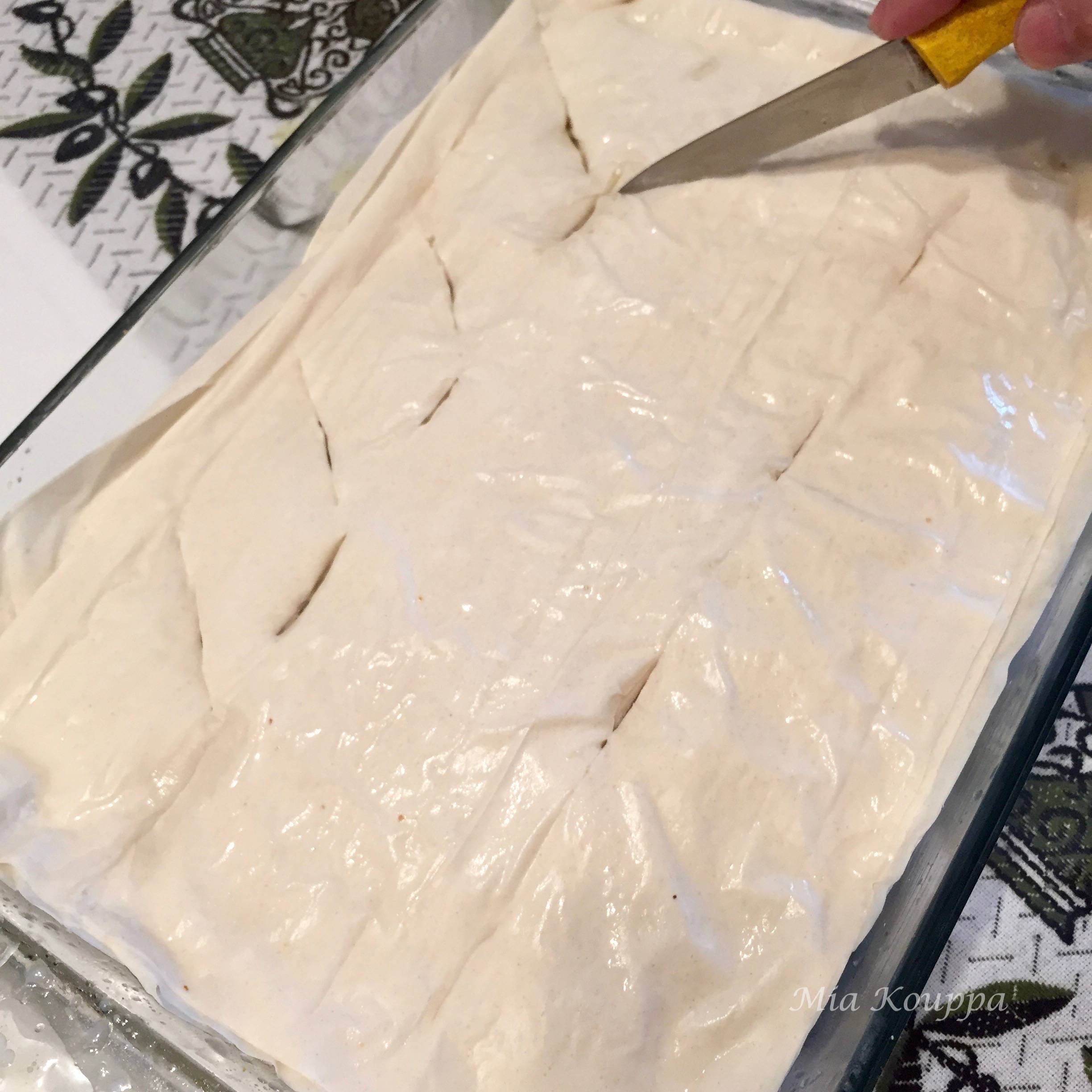
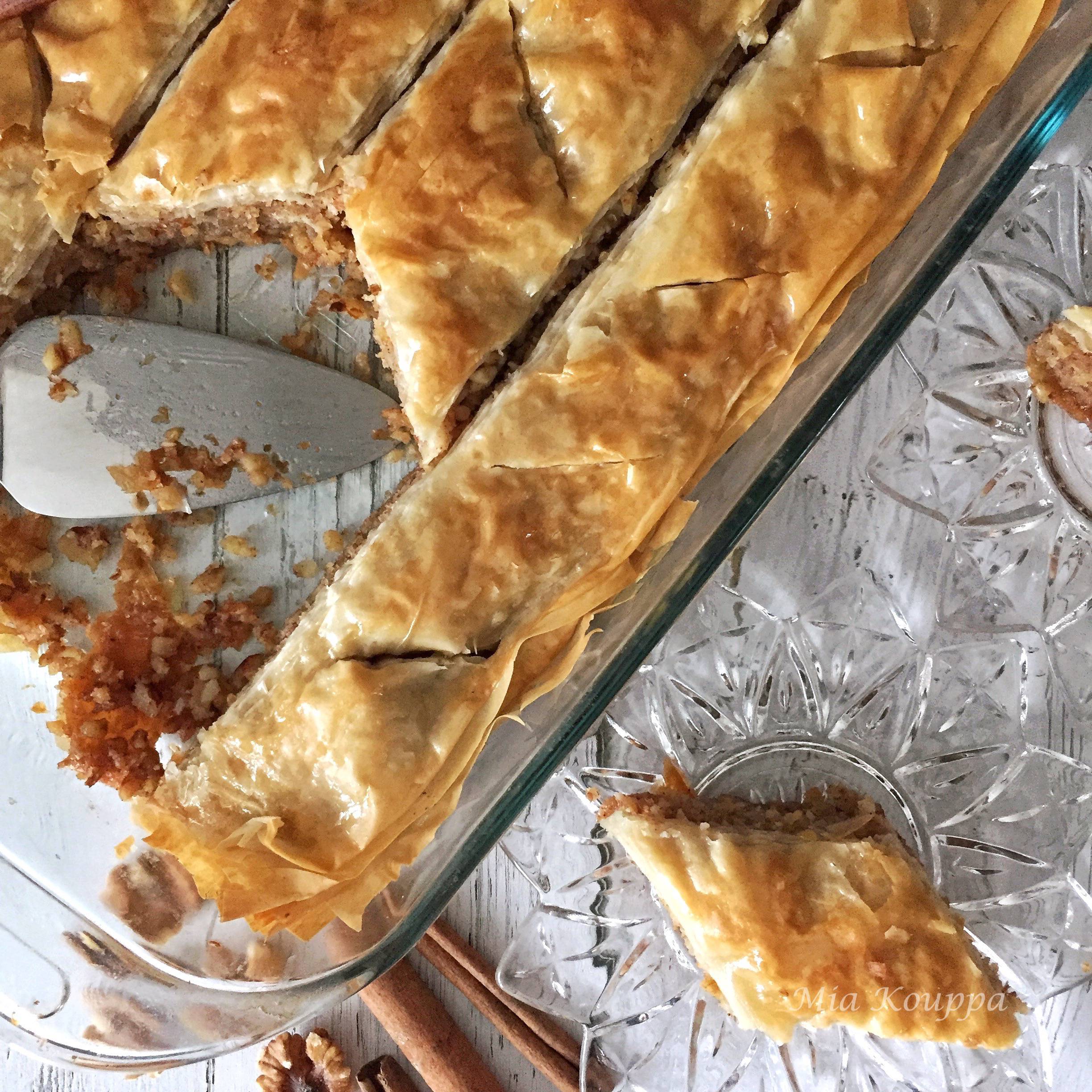
Using a sharp knife, carefully score the baklava making 3 cuts lengthwise, and then creating a type of herringbone pattern alongside these cuts. This is not an exact science and in fact, the only thing you really need to know is that the vents you will create by scoring the phyllo will help it to bake properly. They will also be your guides when it comes to cutting out serving pieces.
Step 8
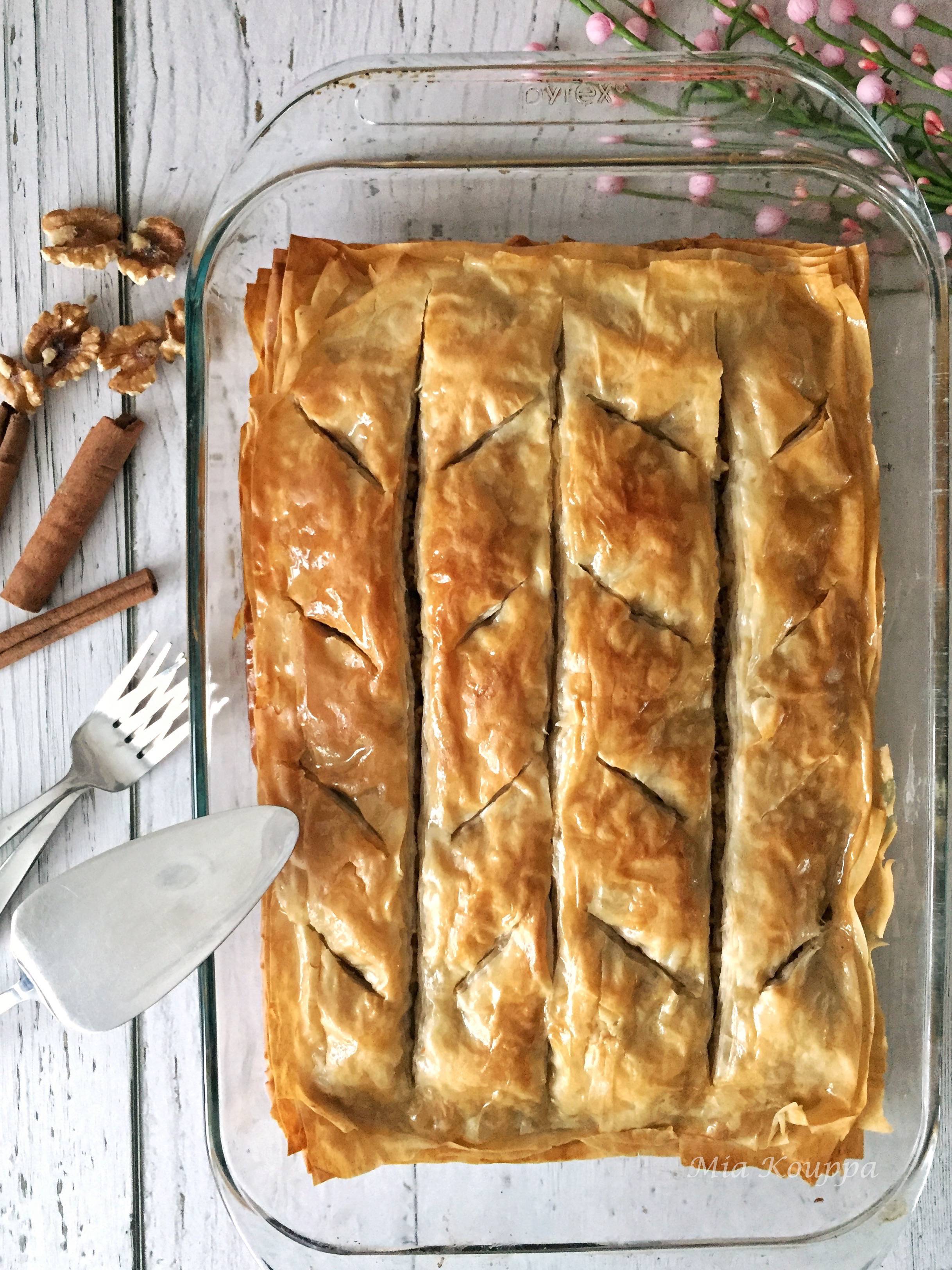
After you have scored your phyllo dough, sprinkle it with about a tablespoon of water using your fingertips, this will prevent the pastry from curling. Place in the middle rack of an oven set at 350 degrees Farenheit (177 degrees Celsius). Bake for approximately 30-40 minutes, or until top is golden brown.
Step 9
Remove from oven, and while your baklava is still hot, pour on the cooled syrup. Pour the syrup evenly over all parts of the baklava.
Step 10
Allow to sit at least a couple of hours before cutting and serving.
Step 11
Baklava can be kept at room temperature for several days. Do not cover it tightly with plastic wrap, as this will cause your phyllo to get soggy. Instead, when it has cooled completely, use a clean tea towel or piece of cheesecloth to cover your baklava. This will keep it fresh and crispy.
Baking tips and helpful hints
Where to find phyllo dough
You can find phyllo dough in pretty much any Middle Eastern or Mediterranean grocer, or any well stocked supermarket. It is often available both frozen and fresh. I prefer the fresh variety because I find the frozen phyllo sometimes gets a bit soggy after it has thawed and it ends up being hard to work with. If the frozen phyllo is all you can find however, go for it!
How to work with phyllo dough
Phyllo dough (sometimes referred to as filo dough) has a bad reputation as being a finicky ingredient which is difficult to work with. Many recipes warn against the fact that it dries out quickly, tears easily and should therefore be handled with extreme caution. I say, hogwash! Sure, phyllo can dry up when exposed to air for a long time…but it has to be a pretty long time, longer than it will take for you to prepare this dessert, even for the first time. To help avoid the horror of dried phyllo however you can always use a clean cloth to cover the phyllo you are not yet working with. And yes, it tears…but you know what…who cares? You will have to use several layers of phyllo dough in this dessert. If you have a few tears, no one will notice and it won’t affect your end product in the least. Just try to make sure that your top-most layers remain intact, for pretty purposes.
Prepare your nuts
My parents use primarily walnuts, along with some almonds, in their baklava. I think that this combination is simply perfect. Instead of buying already chopped nuts, I suggest that you do the chopping yourself. I place walnut halves and whole almonds in a food processor and grind them until they reach a consistency where you have finely ground nuts mixed in with some larger, coarser pieces. This allows you to have the texture of the finely ground nuts, while at the same time giving your baklava some body and bite. I highly recommend you do it this way too. If you don’t have a food processor, you can use a knife to chop up your nuts. I have also used a slap chop, which was once gifted to one of my daughters (when she was six…don’t ask). It requires a little more muscle, but works like a charm.
A few breadcrumbs go a long way!
Unusually (I think), my parents add finely ground, plain breadcrumbs to their nut mixture. When asked why, they explain that the breadcrumbs help to hold in, and evenly distribute, the butter which is also added to the nuts. They also claim that the breadcrumbs aid in soaking in and suspending the syrup. Huh? Really? If we asked them a year ago, our parents would have explained that they add breadcrumbs….because, they do. (I think that this food blogging thing has gone to their heads). In any case, given that this is truly the best baklava I have ever had, regardless of the reason, just add the breadcrumbs.
Butter, two ways
You will notice in the ingredient list below that butter is listed twice. That is not a mistake. It is because you have butter used in two different ways. The first is to mix in with the nuts and breadcrumbs, and the second listing of butter is to brush onto the phyllo dough.
Pour cooled syrup over hot baklava
You should be sure that the syrup you will pour onto your hot baklava is cool. Remember: hot baklava + cool syrup. This will keep you phyllo dough from getting soggy. You can also try cool baklava + hot syrup.
Recipe variations
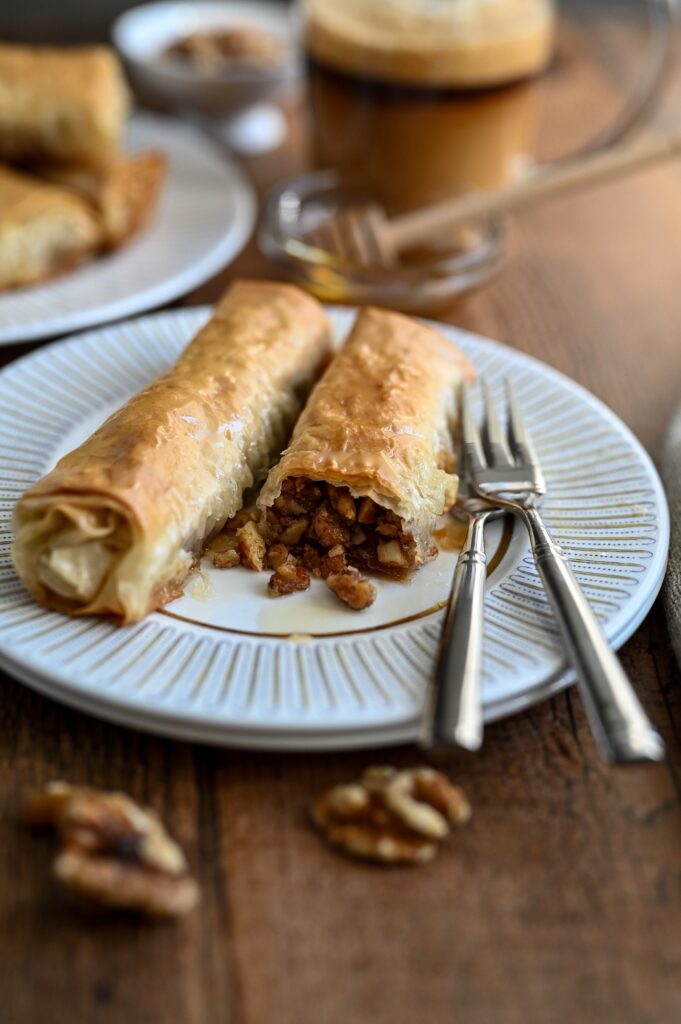
You can prepare baklava as individual rolls or cigars. This version, also called saragli, takes a little longer to prepare, but is easier to serve. You can find my saragli recipe here.
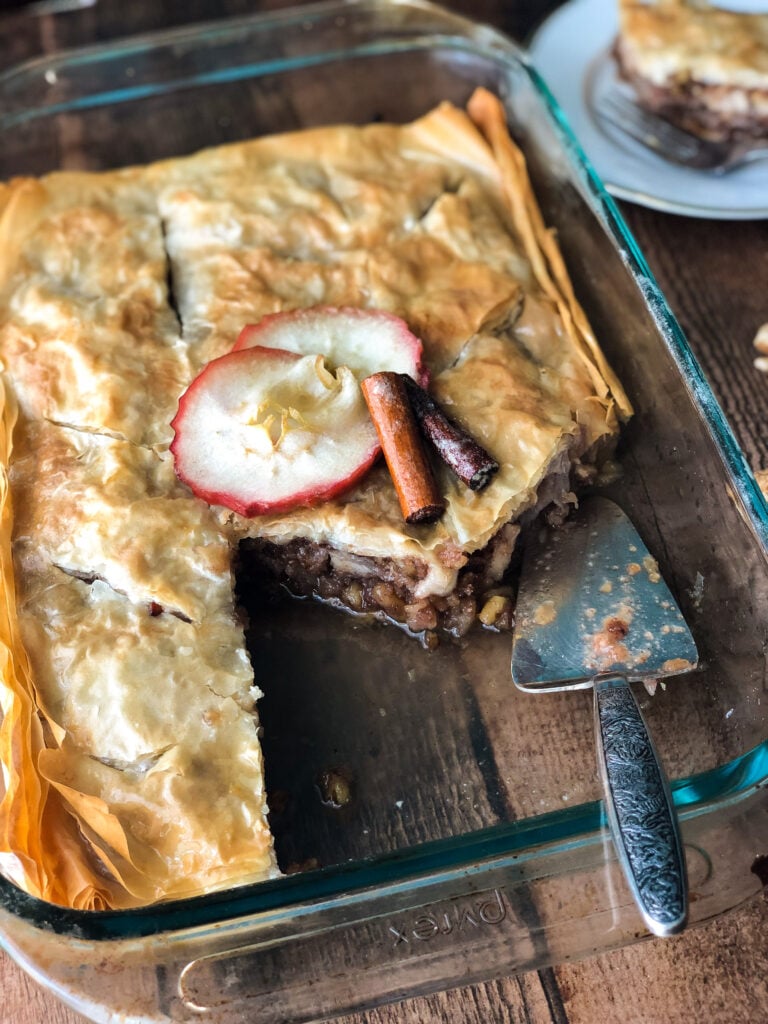
If you love traditional baklava, then I think you will absolutely love my apple baklava recipe.
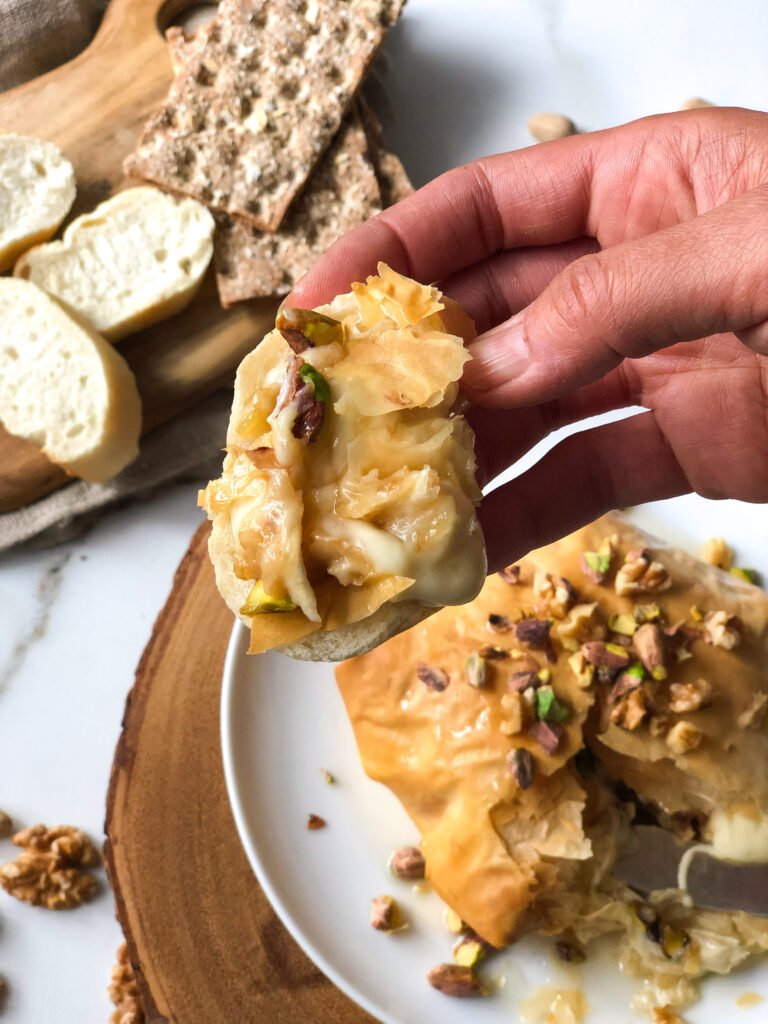
If you want the delicious flavours of baklava, but prefer to skip dessert, give my baklava baked brie recipe a try.
Frequently asked questions
Is baklava a Greek dessert?
Baklava has a rich history, and originated in Turkey, Greece and the Middle East. Ask where it appeared first, and you will get a variety of answers. All I know is that people around the world are pretty wise in realizing how special and delicious baklava is.
What is the best way to store baklava?
The best way to store baklava and to prevent the phyllo from turning soggy is to keep your baklava at room temperature. Cover it with a clean tea towel or piece of cheesecloth after it is completely cooled. It can remain this way for several days (if your baklava lasts that long), and your phyllo will be just as great as the day you baked your baklava.
Is baklava served hot or cold?
Typically baklava is served at room temperature or slightly chilled.
How to serve
Typically baklava is served either at room temperature or chilled. If you like you can add a scoop of ice cream, but this is not necessary or traditional. It is delicious though! Be sure to offer a nice tall glass of water.
Related recipes
If you are interested in more traditional Greek desserts, I think you will love these options:
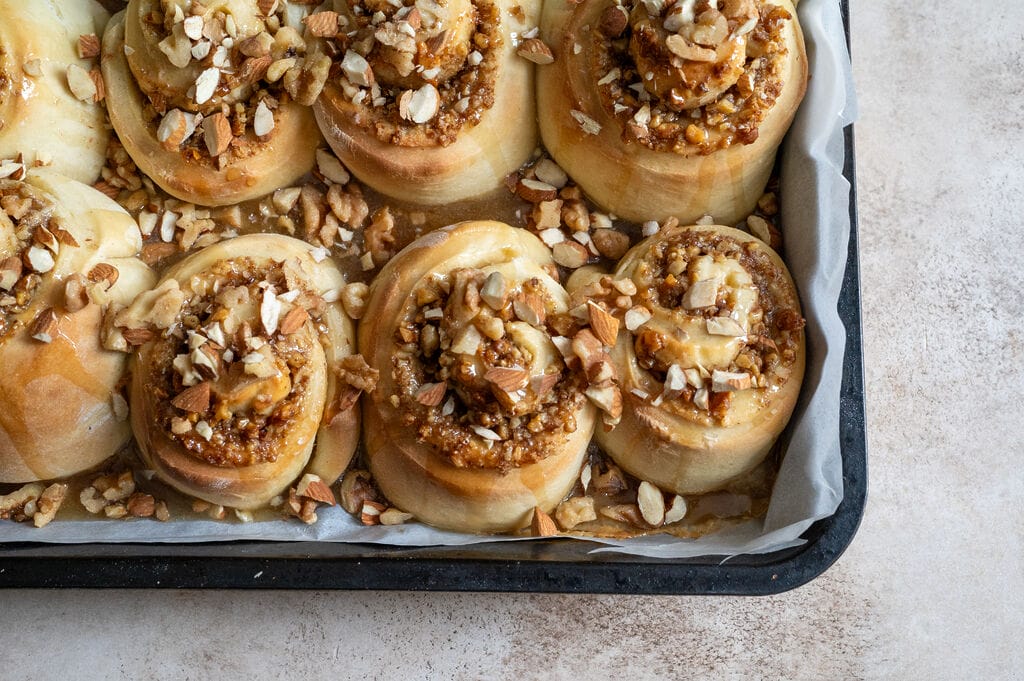
Greek baklava cinnamon rolls
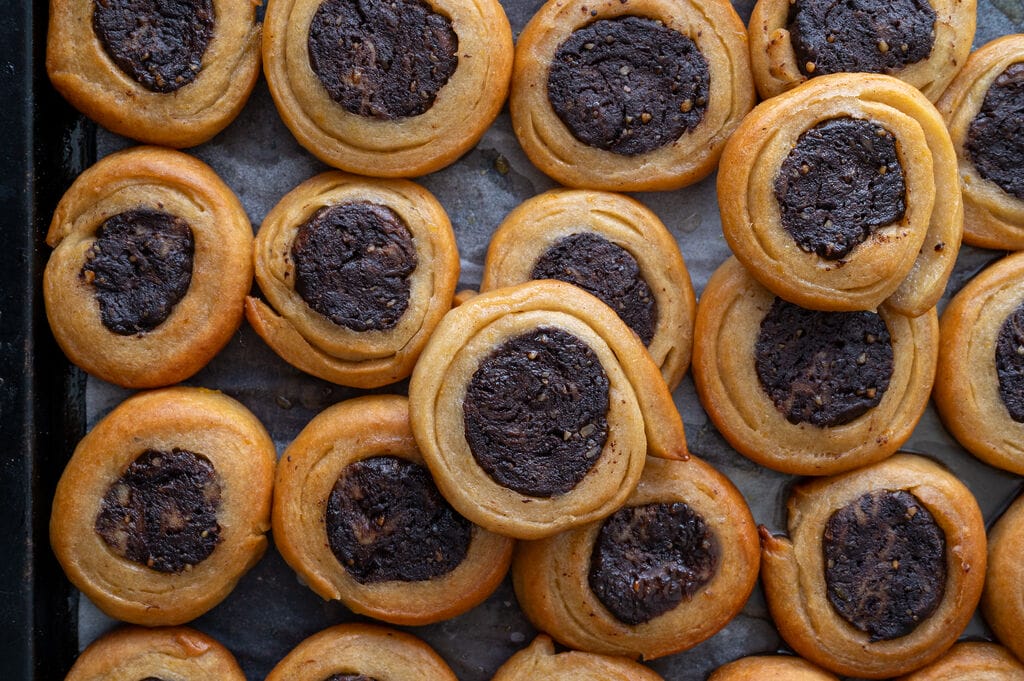
Roxakia, Traditional Greek vanilla and chocolate pastries soaked in syrup
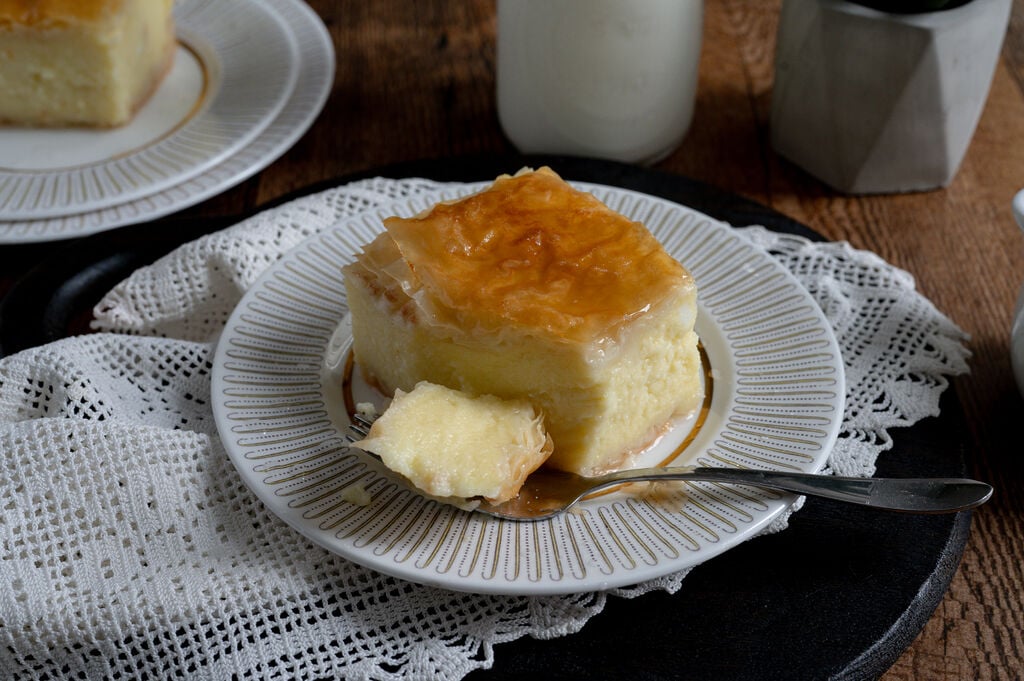
Galaktoboureko, Greek custard dessert (Γαλακτομπούρεκο)
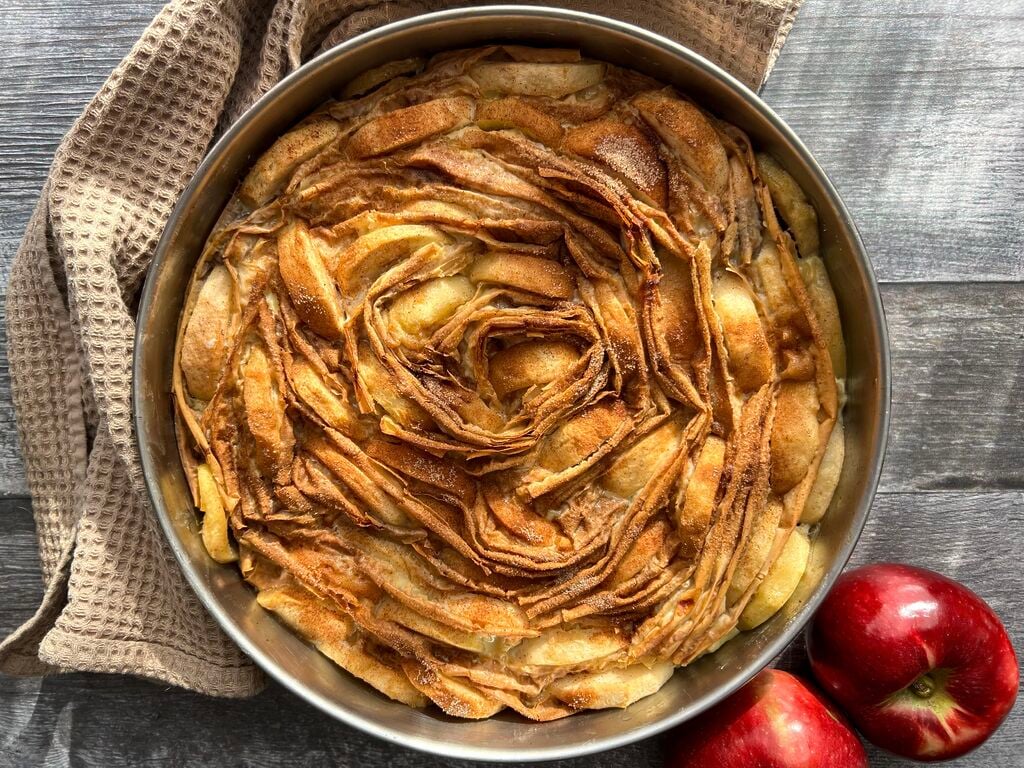
Apple pie flavoured soufra
Subscribe to our newsletter
Pin it if you like it
Video to make baklava
If you make our recipes, please remember to give us a Star Rating and Leave a Comment! We truly appreciate hearing from you!
Recipe
Baklava
Equipment
- Baking pan, 8 x 11 inches
- Mini food chopper, optional, but handy to crush the nuts
- Small sauce pot
Ingredients
- 1 ¼ cup crushed almonds See Recipe Note
- 3 cups crushed walnuts See Recipe Note
- 1/4 cup plain breadcrumbs
- 1 teaspoon ground cinnamon
- 1/2 teaspoon salt
- 1/2 cup unsalted butter, melted
- 1 pound phyllo dough
- 1/2 cup unsalted butter, melted (for brushing onto the phyllo dough)
For the syrup:
- 1 ¼ cup granulated sugar
- 1 ¼ cup water
- 3/4 cup honey
- 1 teaspoon freshly squeezed lemon juice
- 1 slice lemon
- 1 cinnamon stick
Instructions
Prepare your syrup:
- Bring to a boil the sugar, water, honey, lemon juice, lemon slice and cinnamon stick. Lower heat and cook just until sugar melts, stirring occasionally. Remove from heat and allow to cool completely.1 ¼ cup granulated sugar, 1 ¼ cup water, 3/4 cup honey, 1 teaspoon freshly squeezed lemon juice, 1 slice lemon, 1 cinnamon stick
For baklava:
- Preheat oven to 350 °F
- Combine in a large bowl the almonds, walnuts, breadcrumbs, ground cinnamon, salt and melted butter. Stir well to combine. Set aside.1 ¼ cup crushed almonds, 3 cups crushed walnuts, 1/4 cup plain breadcrumbs, 1 teaspoon ground cinnamon, 1/2 teaspoon salt, 1/2 cup unsalted butter, melted
- Butter the bottom of a 9 x 13 inch rectangular glass baking pan. Place 2 sheets of phyllo on the bottom of pan. Your sheets of phyllo will be too large to line the bottom of the pan perfectly. This is good. Leave one end of the phyllo sheets hanging over the long end of your pan. Using a pastry brush or your fingers, brush on some melted butter. When brushing the butter on the phyllo sheet do so lightly. The goal is not to saturate the phyllo with butter. Then, add 2 more phyllo sheets, this time letting the phyllo overlap on the opposite end of your pan. Brush on more melted butter.1 pound phyllo dough, 1/2 cup unsalted butter, melted
- Repeat with 2 more phyllo sheets, overlapping this time on the original side. So, to summarize, your bottom layer of baklava will be 6 sheets of phyllo, with butter being applied between every second sheet, and with phyllo hanging over the two long sides of your pan
- Onto this bottom layer of phyllo, evenly spread 1 ½ cup of the nut mixture. Top this with 4 layers of phyllo, brushing on butter after every second phyllo sheet. Again, remember to allow the excess phyllo to hang over alternate ends of your pan.
- Evenly spread 1 ½ cups of the nut mixture. On top of this add 4 layers of phyllo, as above. Add another 1 ½ cups of the nut mixture, and then top with another 5 layers of phyllo. Spread the remaining nut mixture (it will be less than 1 ½ cups). Top your baklava with 6 to 8 layers of phyllo dough, using some of your overhanging phyllo sheets. Simply bring them over, two at a time, to cover the baklava. You will need to cut off carefully (and discard) some of the excess phyllo dough. Lightly butter the top layer of phyllo.
- Using a sharp knife, carefully score the baklava making 3 cuts lengthwise, and then creating a type of herringbone pattern alongside these cuts. This is not an exact science and in fact, the only thing you really need to know is that the vents you will create by scoring the phyllo will help it to bake properly. They will also be your guides when it comes to cutting out serving pieces.
- After you have scored your phyllo dough, sprinkle it with about a tablespoon of water using your fingertips, this will prevent the pastry from curling. Place in the middle rack of an oven set at 350 degrees Farenheit (177 degrees Celsius). Bake for approximately 30-40 minutes, or until top is golden brown.
- Remove from oven, and while your baklava is still hot, pour on the cooled syrup. Pour the syrup evenly over all parts of the baklava.
- Allow to sit at least a couple of hours before cutting and serving.
- Baklava can be kept at room temperature for several days. Do not cover it tightly with plastic wrap, as this will cause your phyllo to get soggy. Instead, when it has cooled completely, use a clean tea towel or piece of cheesecloth to cover your baklava. This will keep it fresh and crispy.
- Enjoy!
This looks delicious!
Thank you so much. It’s delicious…and easy! 🙂
I’ve always wanted to try it!
Please do! And let us know how you like it 🙂 I promise…it is very easy! (and delicious 🙂 )
I will! My husband loves sweet treats and I love trying new recipes so it works out great lol!
Love baklava. Except for honey cake it’s the only way I like honey.. (Sorry Pooh bear). Thanks for the recipe and for the pep talk on phylo.
You are so welcome 🙂 And I agree…honey cake is divine 🙂 I’m glad you appreciated the phyllo pep talk!! 🙂
I can smell it in the pictures. Lovely post. Very tempted to give it a go now.
Thank you 🙂 I hope you do give it a try! It’s simple and quite yummy !
Looks amazing, love Baklava 🙂
Thank you 🙂 It is one of our favourite desserts!
Your baklava is the BEST ever, I’ve made it plenty of times. Thank you so much!
Yay!!! We are so happy to hear that!! Thanks for letting us know xoxo Helen & Billie
What number phyllo dough is best for baklava?
Hi there! We usually opt for a thin phyllo dough, so either a number 4 (ideally) or 7 will work well. Hope you love the recipe! xoxo Helen & Billie
I love this recipe – it’s delicious! But my nut mixture always falls apart and out of the phyllo. What am I doing wrong?
Hi Margarita! So glad that you love this recipe! Not sure why your nut mixture is not staying put! It should 🙂 There are a couple of things we can think about – maybe your nuts are left in pieces which are too large, or perhaps the mixture is not combined evenly enough with the butter (which would help bind it a bit). Otherwise, is there enough syrup? Are you cutting it with a sharp enough knife (after you score it prior to baking)? Maybe it is worth pressing down on your baklava before baking? Those are a few things we can think of – hopefully that works!
xoxo Helen & Billie
This was delicious! A food processor would certainly save time chopping the nuts. I replaced some of the water with the juice of half an orange. It lasted for a week in the fridge with a tea towel over it. It only lasted that long because I was saving some for my parents. Thank you 🙂
You are a good child! Hope your parents loved it as much as you did 🙂 Hope you continue to find much to love here with us xoxo Helen & Billie
Hi I am making the baklava on Thursday and bake it on Saturday morning since I have a party at4:30. Can it stay in the fridge with a plastic wrap until then ?
Hi there Bill. Sure, that should be fine! Thank you for trying our recipe – we hope everyone loves it!! Let us know 🙂 xoxo Helen & Billie
Can pistachios be used instead of either the walnuts or almonds?
Hi Tegan, yes they can. You can actually use any nut you like 🙂 Enjoy! xoxo Helen & Billie