
Vasilopita or Greek New Year Cake (Βασιλόπιτα)
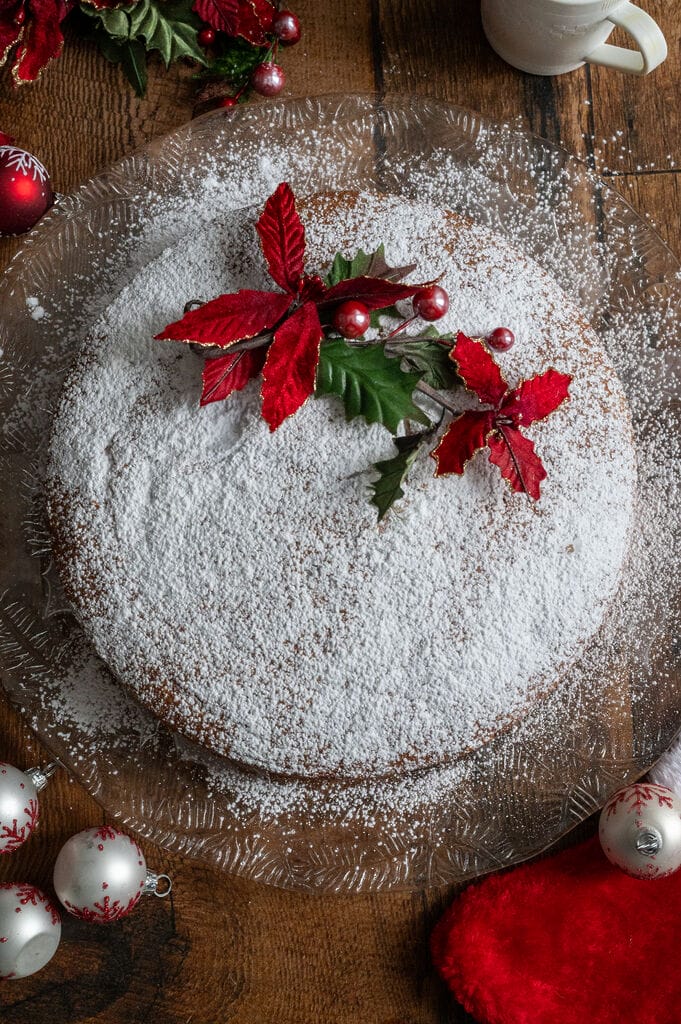
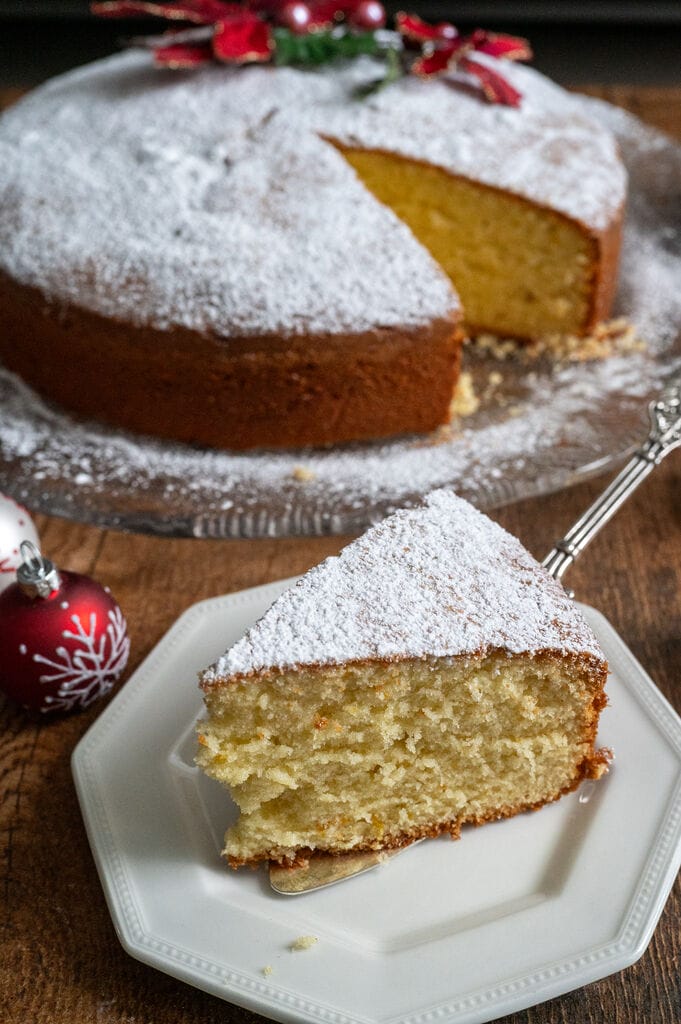
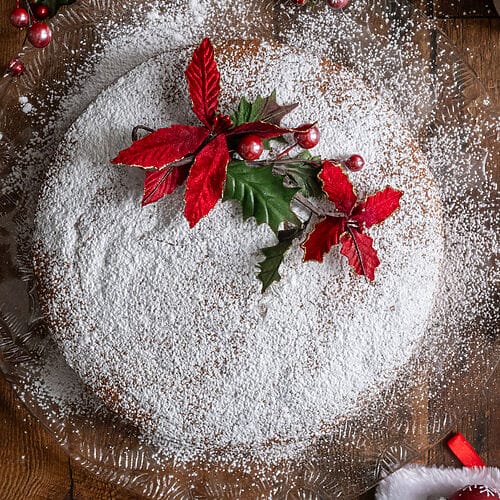
Vasilopita (or Basilopita) is a perfectly sweet and flavourful New Year’s Cake! This cake is full of meaning, and is baked with a coin hidden inside of it. My recipe is for a vasilopita cake that is flavoured with orange and a bit of cognac. The texture is just perfect, as the batter includes milk, butter, eggs and just the right amount of sugar. It is a hit every year!
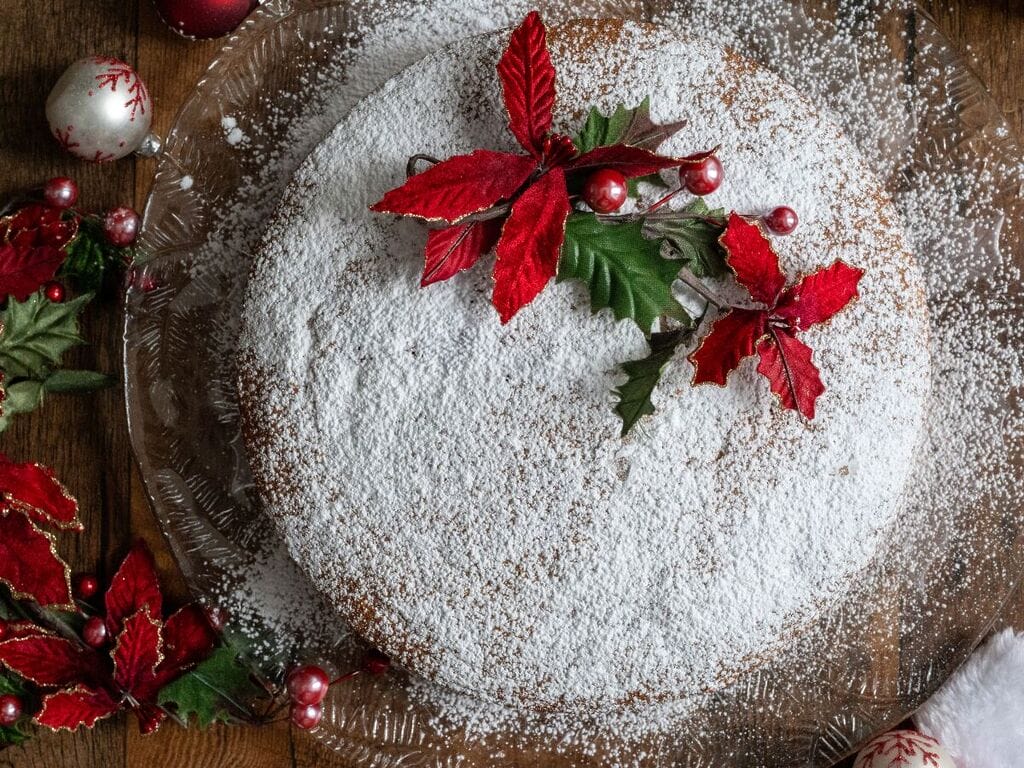
There are many recipes for vasilopita, including some that are more bread-like and are very similar to the traditional Greek Easter bread called tsoureki. I love the cake version, and this recipe is pretty fail-proof. So many people have messaged Mia Kouppa to let us know that after trying this recipe, it became their go-to recipe every year. Love that!!
This is such a great cake that if you simply want a cake and not a vasilopita, follow the directions exactly, but omit the coin. Now you have a lovely cake that you can serve with tea, coffee or a warm cup of hot chocolate.
Why this recipe works
Why do so many people turn to this vasilopita recipe, year after year? Probably because the recipe is easy to follow so even a non-baker will have great success, so long as they follow the recipe. As well, the ingredients are very simple and are probably items you already have in your kitchen.
In preparing this recipe I made sure that the proportions of all ingredients are just perfect – this helps to create a vasilopita that is flavourful, but that will also hold up to being sliced and served with ease. You don’t want the coin falling out before anyone has a chance to find it!
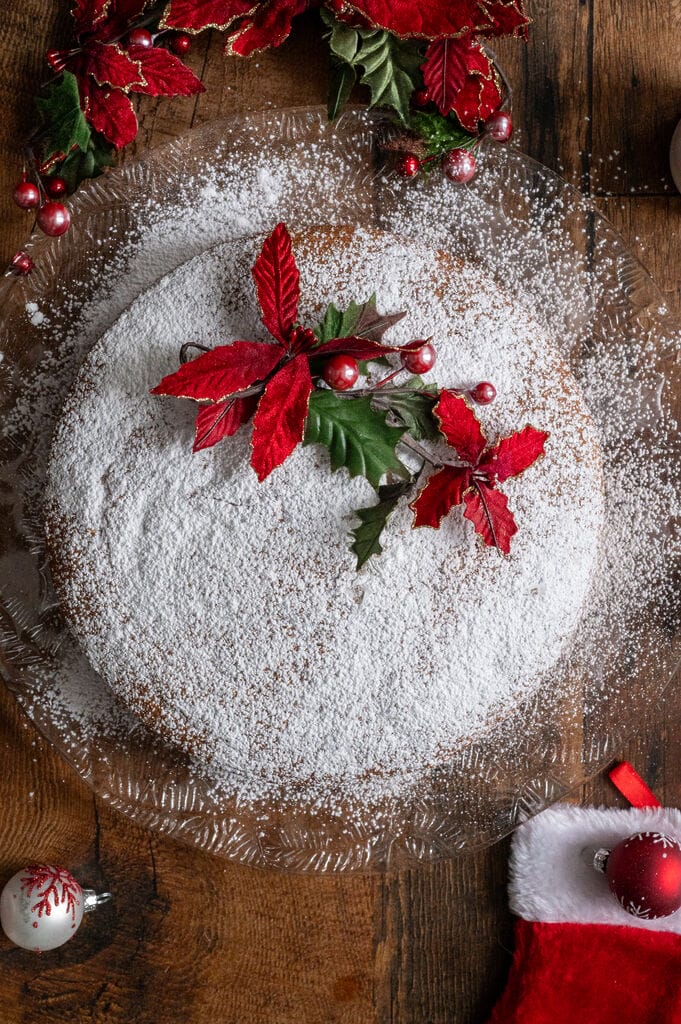
Key ingredients
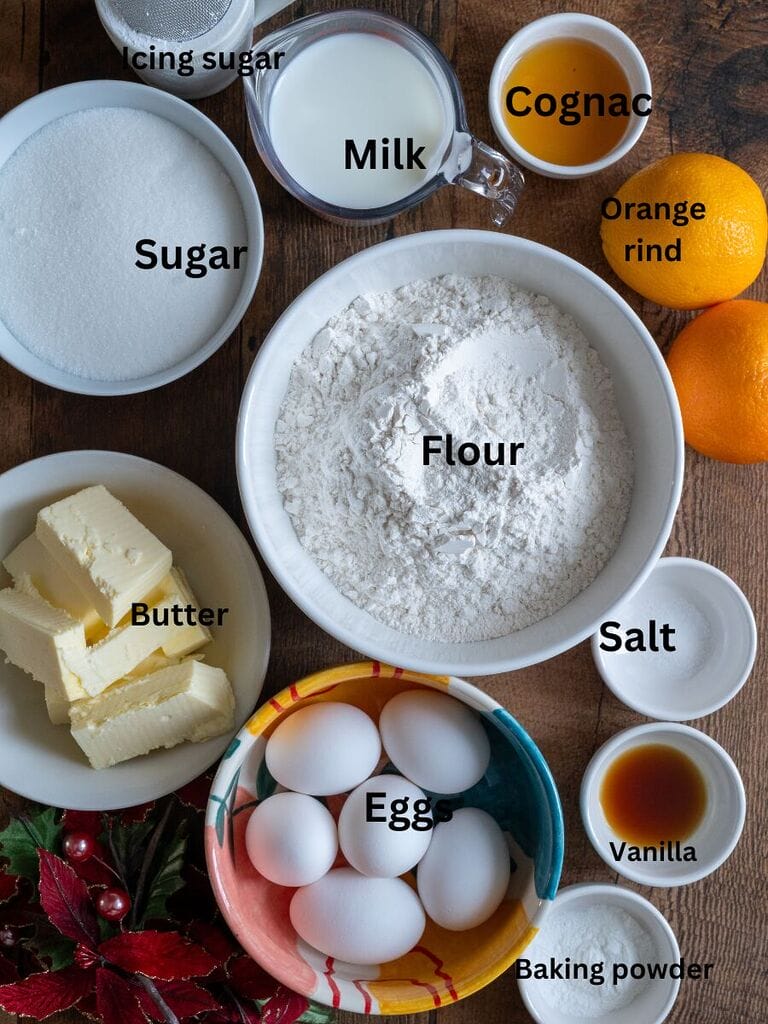
All purpose flour – Regular or plain flour, this is the base for your cake batter. Because the recipe calls for 3 1/2 cups sifted all purpose flour, you sift your flour first and then measure out 3 1/2 cups.
Sugar – White sugar is used to sweeten the vasilopita.
Baking powder – In order for your vasilopita to rise you need a leavening agent, like baking powder.
Salt – Salt in sweet baked goods really brings out the flavour.
Milk – Using milk as the liquid in this cake creates a rich and delicious crumb.
Eggs – I use large eggs, and there are six of them in this recipe! Don’t cut back on the eggs – they are important to making the vasilopita as great as it is.
Butter – I use unsalted butter
Cognac or brandy – I prefer to use a Greek brandy, but any variety will do. It has a subtle orange flavour that fits well with this vasilopita.
Vanilla extract – For flavouring
Orange zest – Finely grate orange zest trying to only get the orange part of the peel and not the white bitter part underneath.
The coin – If you are making a traditional vasilopita, you have to insert a coin into the batter!
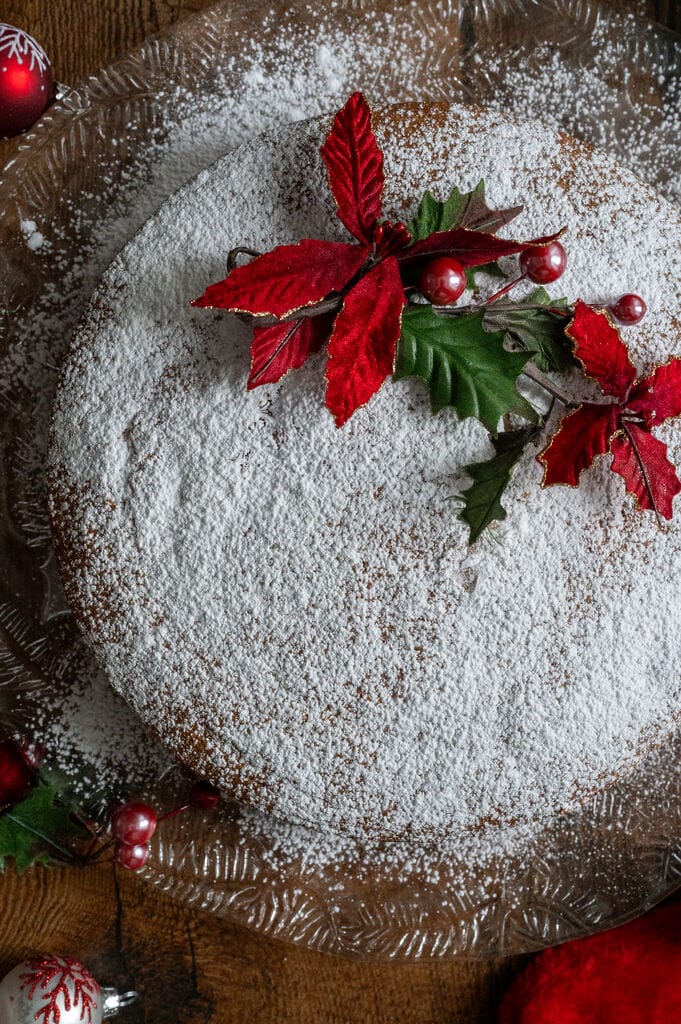
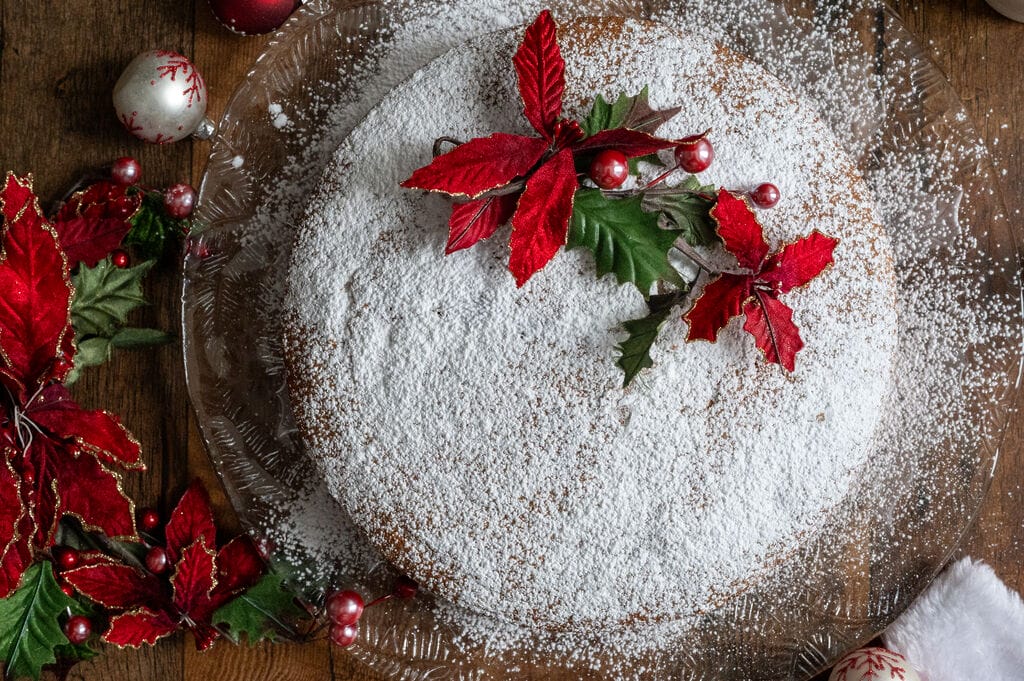
Icing sugar – This is technically optional, but I love to dust my cooled cake with icing sugar. It looks pretty, and tastes great.
How to make vasilopita
The preparation of this cake is really quite simple. It actually tastes best the day after it is made, which could be helpful in terms of planning and preparation for your get togethers!
Instructions
Step 1
Preheat oven to 350 degrees Fahrenheit. Set rack in middle.
Step 2
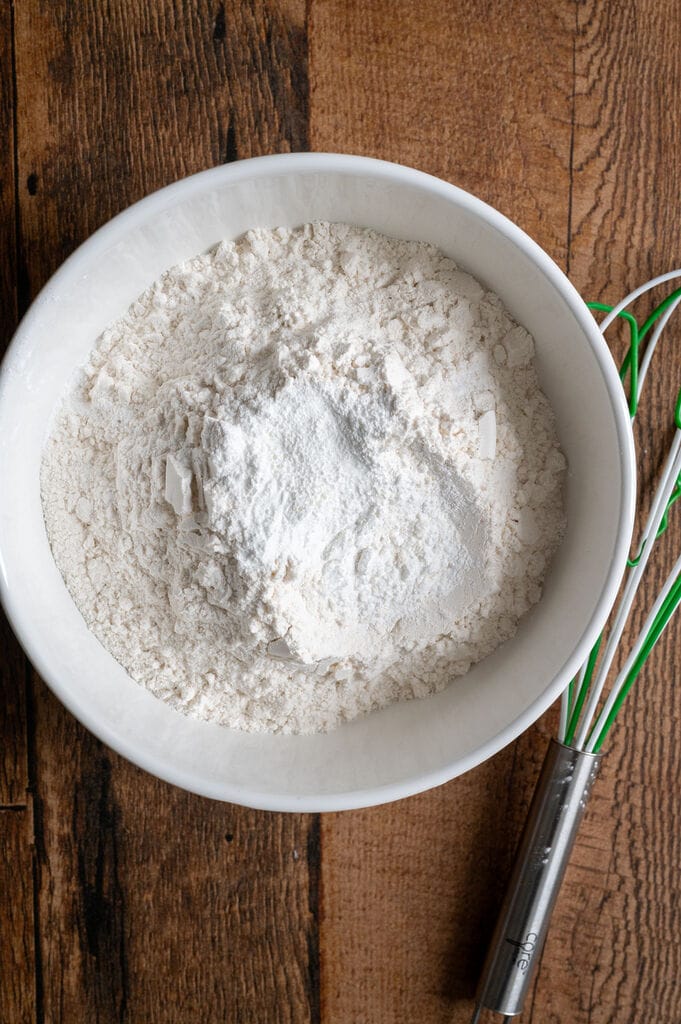
In a large bowl, combine the sifted flour, baking powder and salt. Mix together with a whisk or a fork. Set aside.
Step 3
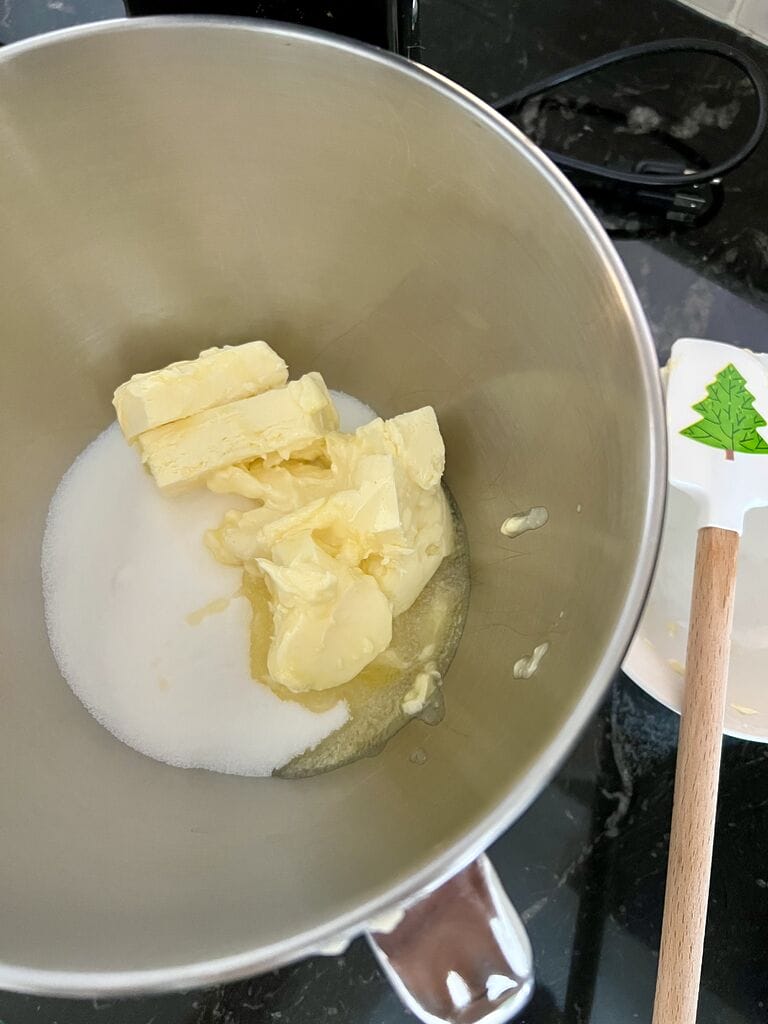
In the bowl of an electric mixer, at medium speed, cream together the butter and sugar. Beat until well combined and smooth, approximately 4-5 minutes.
Step 4
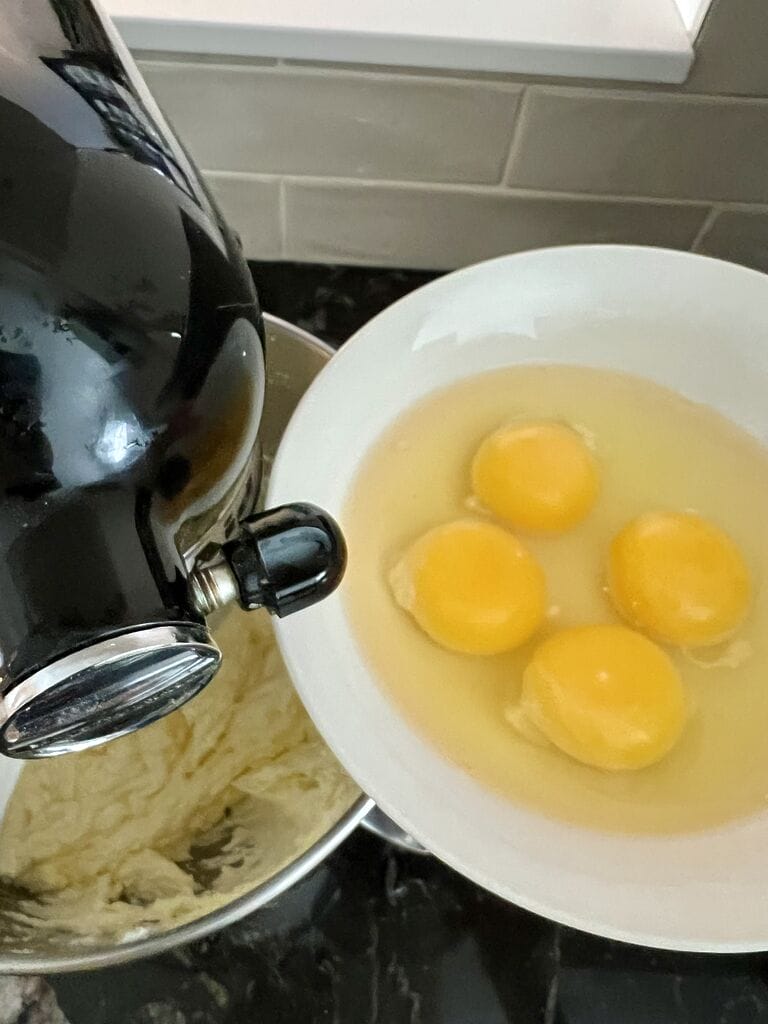
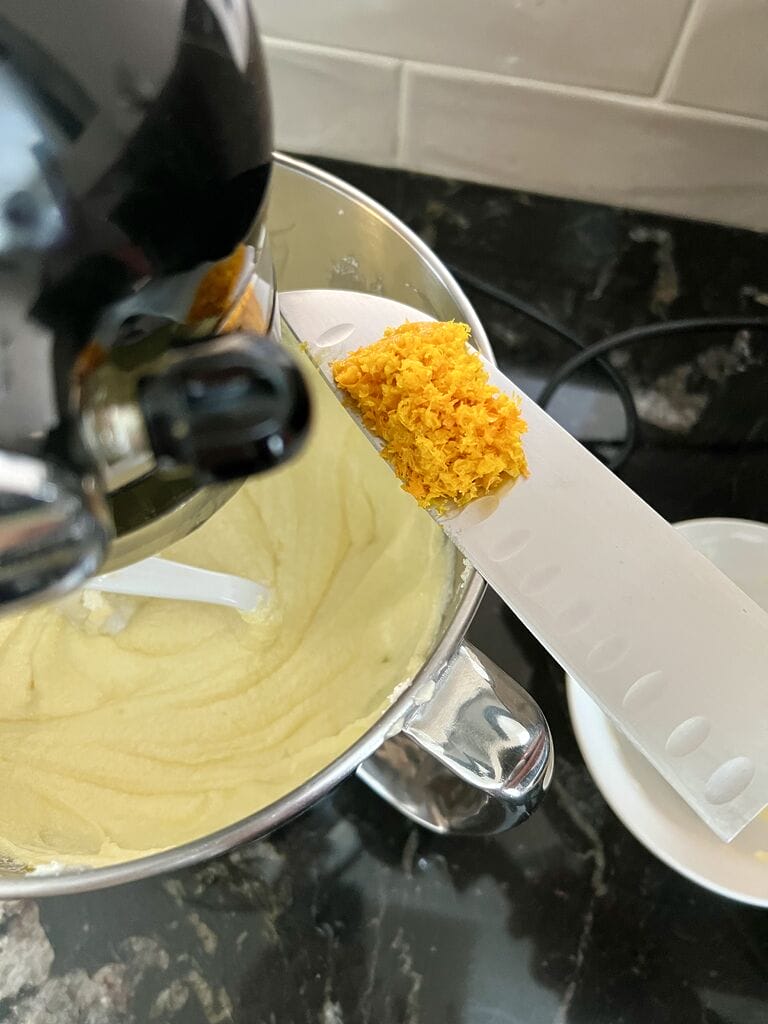
To the sugar and butter add the eggs, one at a time. Beat well after each egg is added. Then, add the orange rind, vanilla extract and cognac. Mix well.
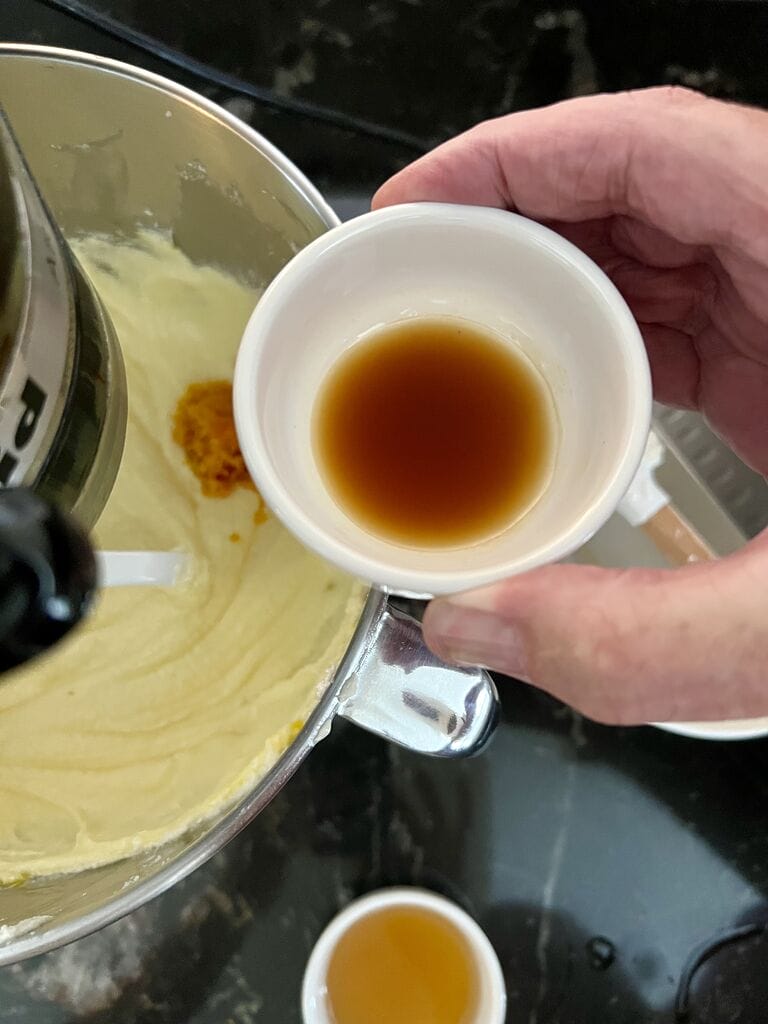
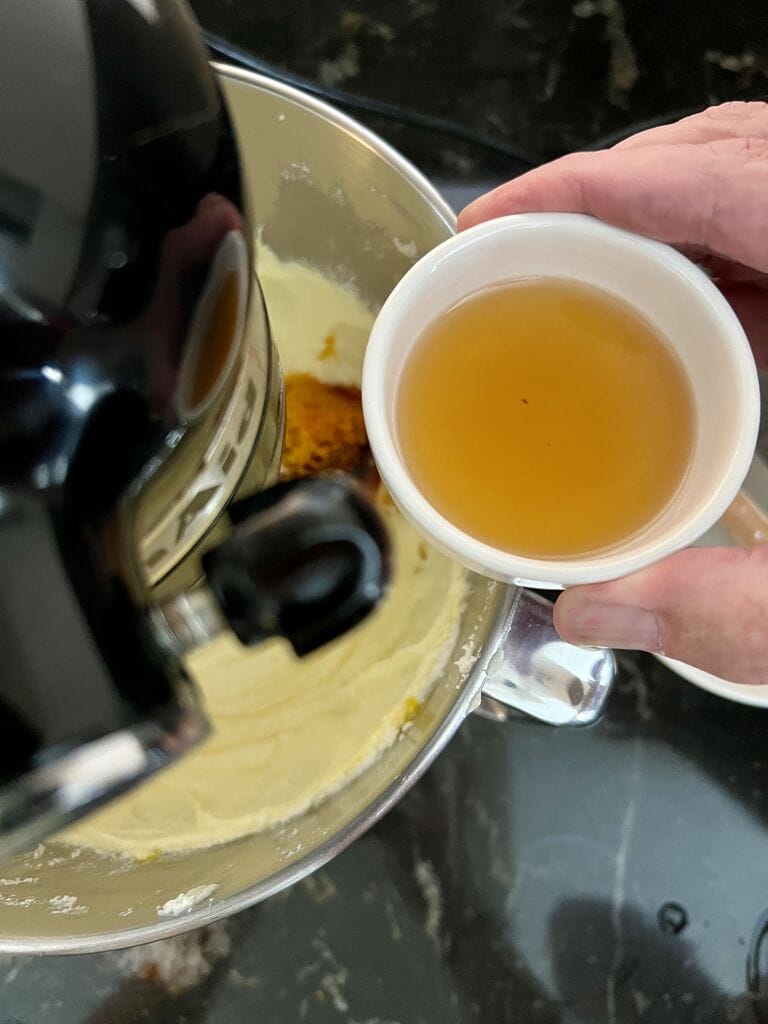
Step 5
Slowly add one cup of the flour to the bowl of the electric mixer. Mix well. Then, add the milk and the remaining flour. Mix well, over low speed to prevent too much splattering. When the ingredients have been combined, turn the speed to medium and continue beating for a another minute or two. Your batter should be smooth and without any lumps.
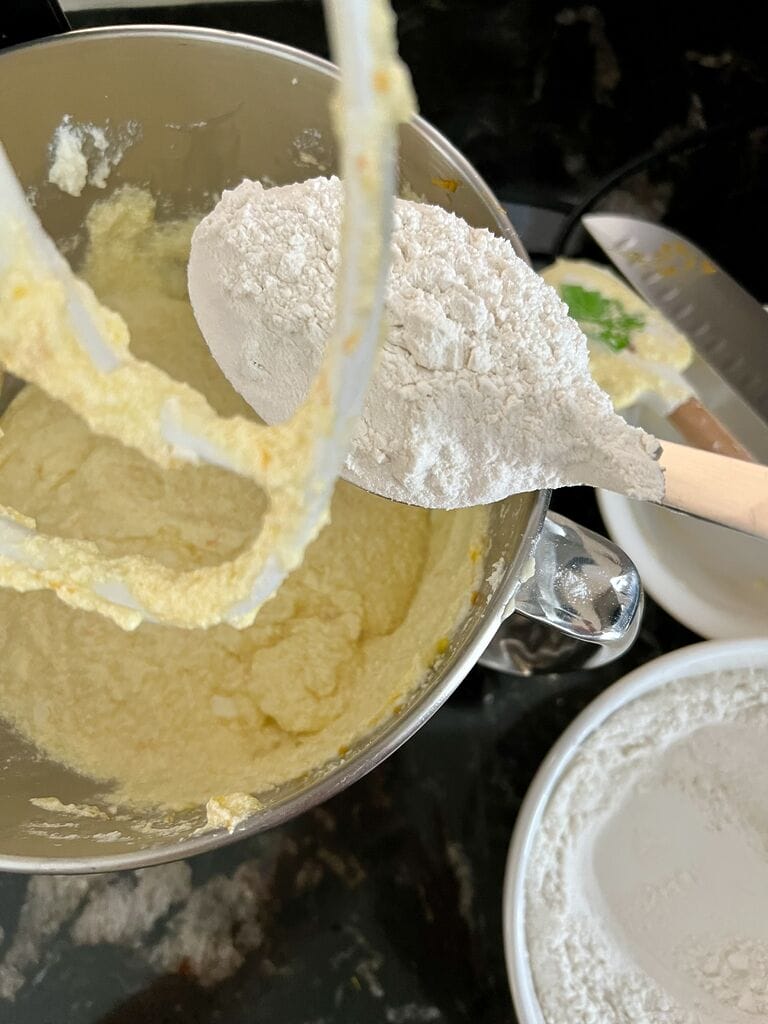
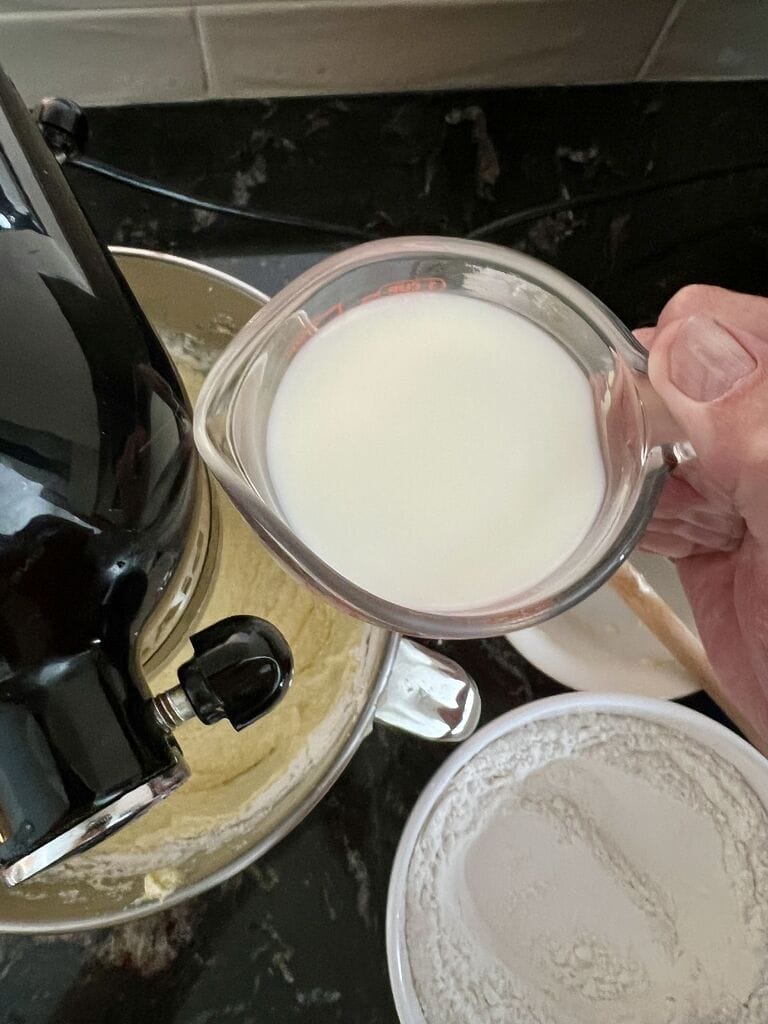
Step 6
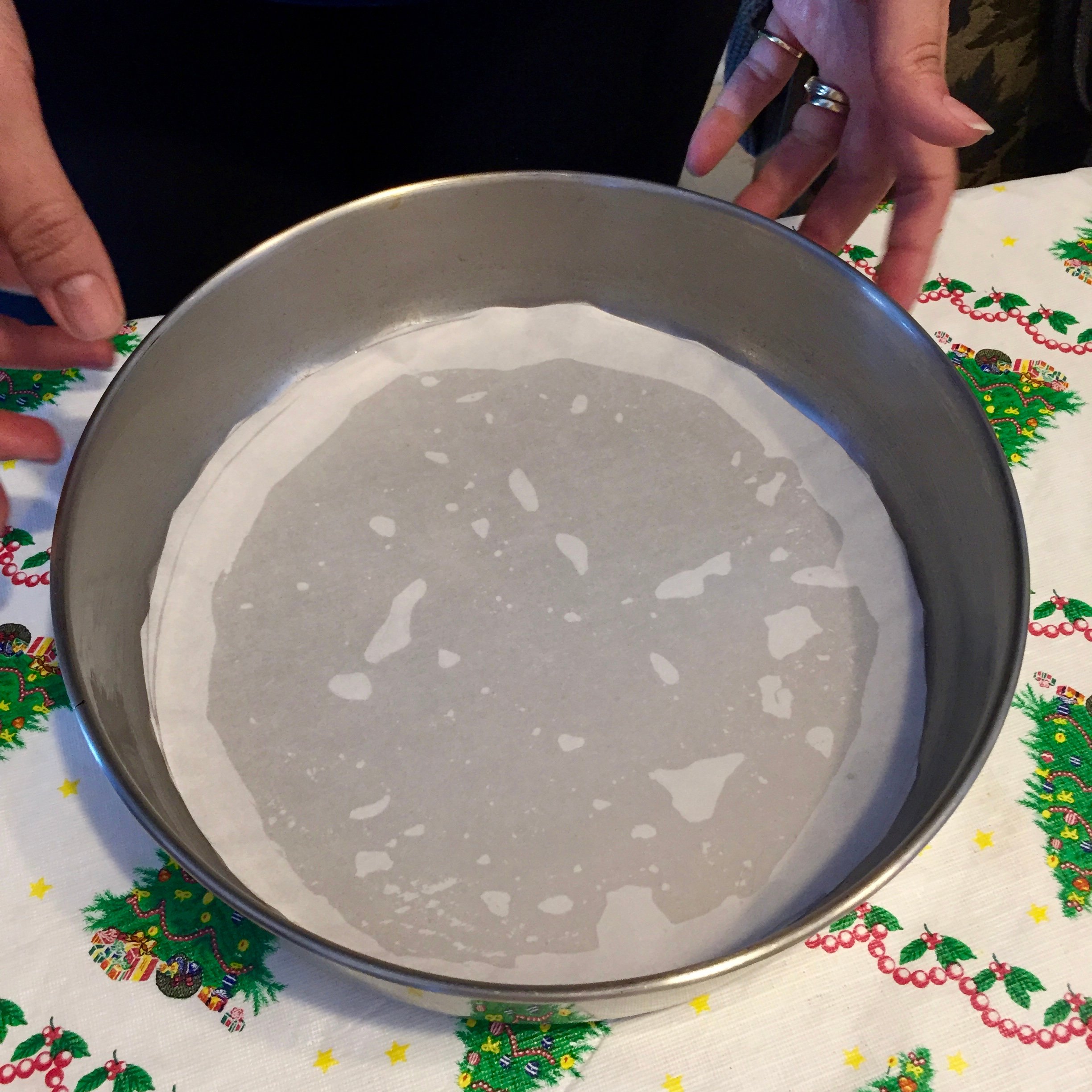
Take a 10 inch round baking pan and grease the bottom and sides with a thin layer of vegetable oil. Line the bottom of the pan with parchment paper.
Step 7
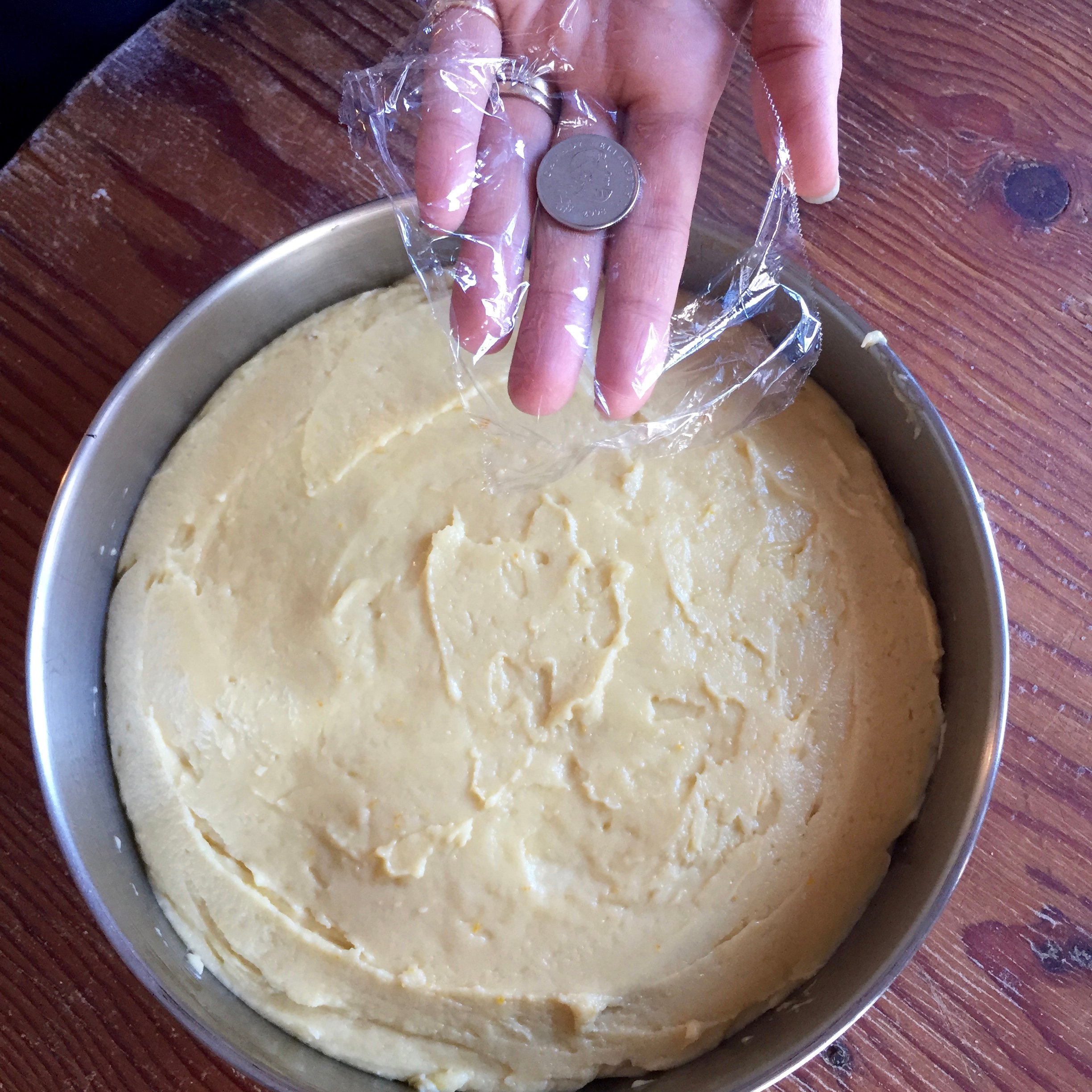
Take a silver coin (usually a quarter) and wash it well. Dry the coin and then wrap it in securely in food grade plastic wrap or aluminum foil. Set aside.
Step 8
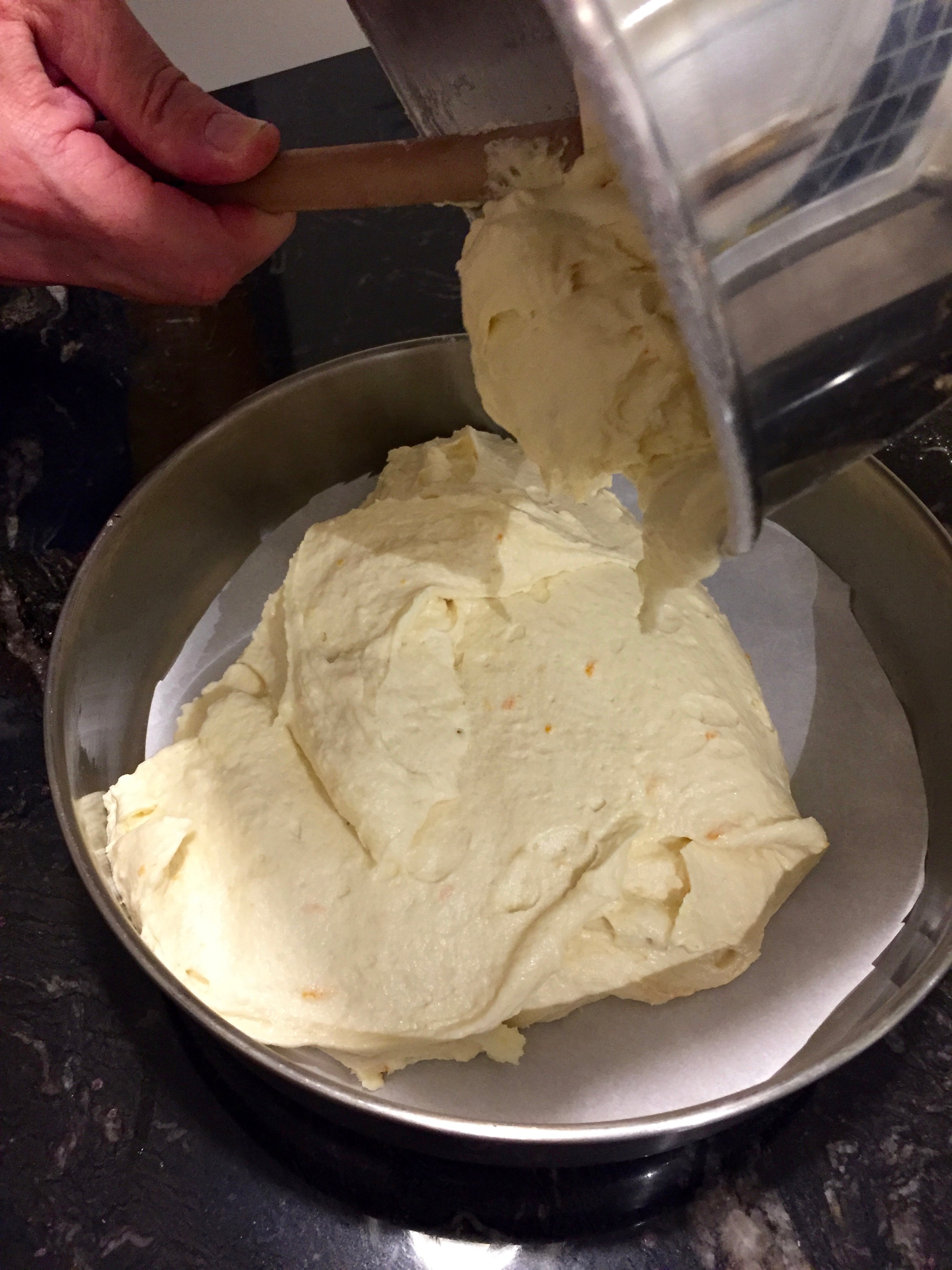
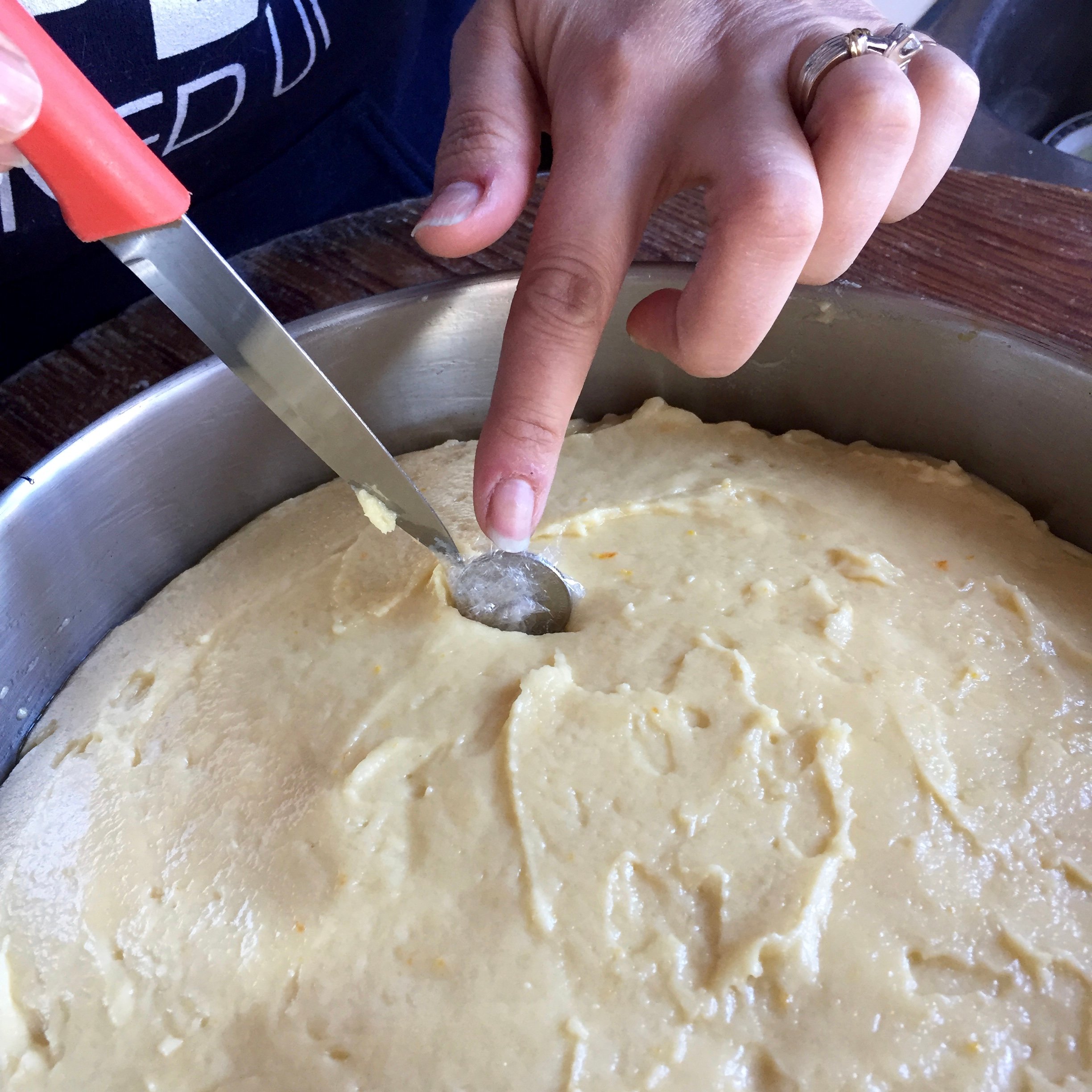
Pour the batter into the prepared cake pan. Smooth out the batter so it is spread evenly in the pan. Using a knife, make an indentation in the batter in order to make it easy for you to slip the coin in. Be sure that the coin does not poke out the top of the vasilopita batter. Smooth the top once again.
Step 9
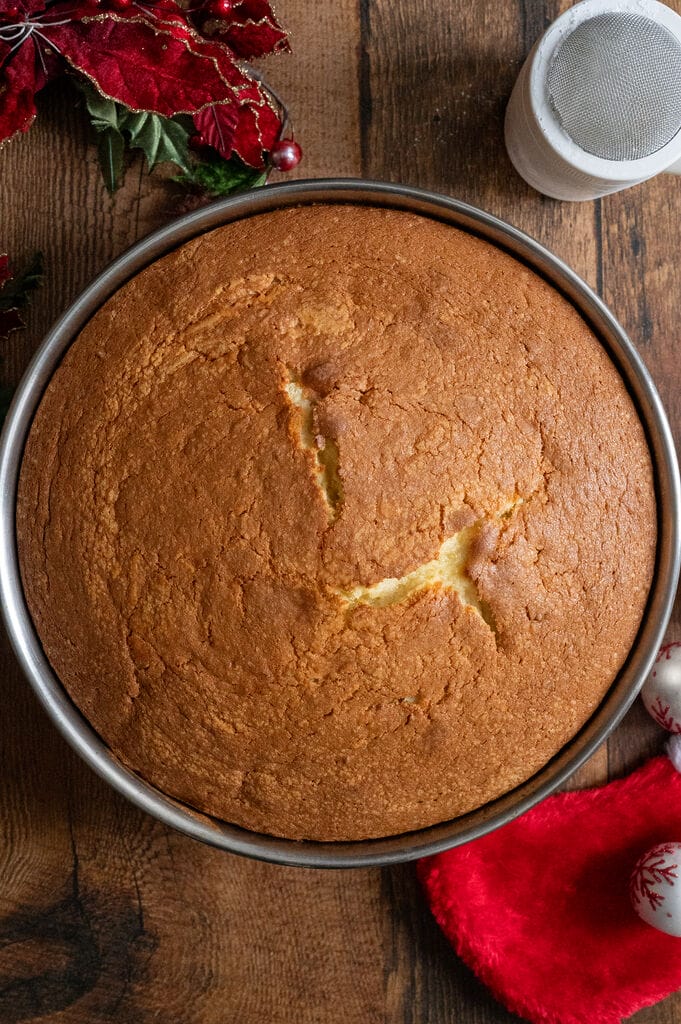
Bake your vasilopita in the middle rack of your oven for approximately 60-70 minutes. You can check that it is done by inserting a clean toothpick into the center of the cake. If it comes out clean, with only crumbs attached to it (no wet batter), then your vasilopita is ready. Remember each oven is different, therefore, start checking your cake after 55 minutes to check for doneness.
Step 10
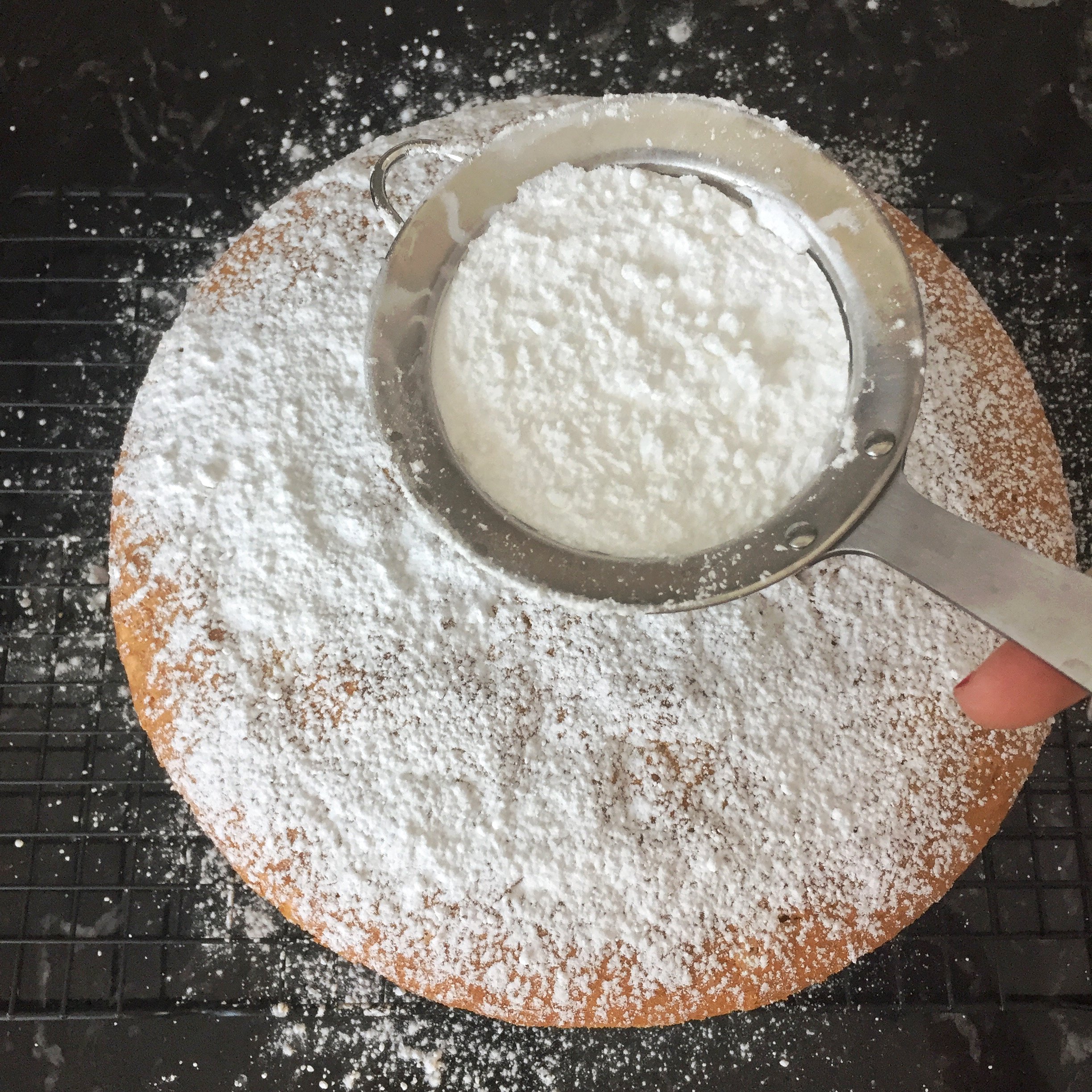
Allow to cool in the cake pan for about 5 minutes and then remove it from the pan and allow it to cool fully on a cake rack. Once it is fully cooled, sprinkle the top with some icing sugar, and serve.
Step 11
Be mindful when serving the vasilopita to small children and the very elderly; the coin could be a choking hazard.
Recipe substitutions
Omit the alcohol
If you prefer to keep your vasilopita alcohol free, no problem! Simply use orange juice instead.
Use any dairy milk
I have made this cake with full fat milk, lactose-free milk, skim milk…they all work just fine. Use whichever dairy milk you have on hand.
The meaning of the vasilopita
Ever wonder why, in most Greek families, names seem to be on repeat? At any family function you are likely to find 4 Marias, 3 Costas and about 7 Georges. That’s because Greek parents have traditionally always named their children after their own parents. So, two siblings who each have daughters, may very well name their girls after their common mother, for example. Many Greek names are also names of Saints, making the Nameday (the day on which we commemorate the life of a given Saint) a much bigger deal amongst many Greeks than birthdays could ever be. Each of us is named after one of our grandmothers, and one of our Greek names (Vasiliki) is also associated with Saint Basil the Great, who is commemorated on January 1st, the day of his death.
St. Basil the Great was the Greek bishop of Caesarea Mazaca in Coppadocia, in Asia Minor (what is today, Turkey). In addition to his theological works, he was also a great support for the underprivileged and poor. In his memory, on St. Basil’s Day, homes of Orthodox Christians serve vasilopita (translated to mean St. Basil’s bread) to honour him. Although there are many versions and types of vasilopita, they all have one thing in common; there is a single coin baked into each one. This coin is a symbol and reminder of St. Basil’s intervention against the emperor of Caesarea, and God’s miracle. One year, the emperor of Caesarea had levied a heavy tax on the people, during a year of great famine and hardship. Upon hearing the news, St. Basil asked the emperor to repent, and he did. The emperor ordered that all gold coins, money and jewels that the people had used to pay this tax, be returned to them. Bishop Basil was assigned the daunting and overwhelming task of doing so. Unsure of how to return the goods to their rightful owners, prayer led St. Basil to bake a large pita, into which he inserted all the valuables. He then called the townspeople to each take a piece. Miraculously, each person received a piece of vasilopita that contained the exact items which were to be returned to them.
How to serve vasilopita
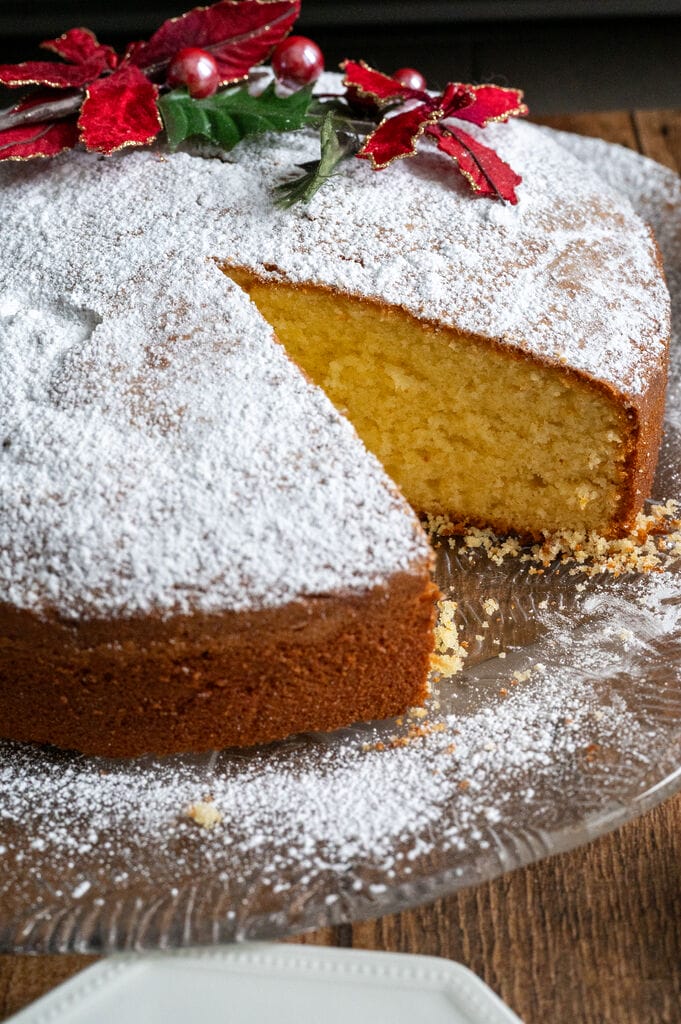
In my family, vasilopita is always served after lunch on the Feast Day of St. Basil, which is coincidentally also New Year’s Day (January 1st) for many. Our father is typically the person who cuts and serves the pieces, and this is done in a particular order. The first piece is cut and saved for Christ, the second for St. Basil, and the third for the less fortunate. Then, a piece of vasilopita is cut for all members of the family, and any friends who may be present. The vasilopita is always offered first to the oldest person present, up until the youngest. The person whose piece contains the coin is expected to have good luck and blessings for the upcoming year.
Karydopita, Greek walnut cake, is another one of our crowd pleaser cakes, see video below:
If you love learning about the meaning behind certain recipes, then I think you will also like to learn how to make fanouropita, the cake made to honour the Feast Day of St. Fanourios, the patron saint of lost thing.
Baking tips and helpful hints
Mix your batter carefully
Unlike cooking, where you can take some liberties, and perhaps even some shortcuts, baking really is a science. There are many pitfalls you can encounter when baking, which is why it is important to find reliable recipes (like the ones here at Mia Kouppa) and follow them carefully.
One of the important things to keep in mind when you are making vasilopita is how the batter comes together. Sometimes you will bake a cake and end up with streaks, or areas of dense, sodden cake. These give the impression that the cake is under-baked – even though it’s completely baked. In order to prevent this from happening, you must beat together the sugar, butter and eggs, slowly; your mixer should not go any higher than medium speed.
Then, when you add the dry ingredients, the mixing speed has to be slower still. By keeping the mixer speed at medium and lower you avoid developing the flour’s gluten too much; which will help avoid your cake sinking in the middle once you take it out of the oven. It is this sinking which creates dense, moist, gluey streaks in your cake. .
How to prepare your cake pan
Although you will grease your cake pan with some vegetable oil, is it still a very good idea to line the bottom of the pan with parchment paper. The easiest way to get just the right size of parchment paper for the bottom of your round pan is to place your baking pan on a sheet of parchment paper and to trace its outline with a pencil. Then, use a scissor to cut out the perfect circle. Ta da!
Inserting the coin into your cake batter
Before inserting the coin into your cake batter, it is a very good idea to wash it and to then wrap it with either food grade plastic wrap or aluminum foil. You can even use parchment paper, although that can be a little more cumbersome to wrap the coin in. Traditionally, before inserting the coin into the cake you would use it to make the sign of the cross over the pan. The easiest way to get your coin into the batter is to use a knife to make a small cut into the batter and slip the coin right in. Spread the batter evenly so that it is not obvious where the coin is.
How to display the year on your vasilopita
There are many ways to bake a vasilopita. Some versions are very bread-like, and similar to the Easter tsoureki. Other versions, like this recipe, are more cake-like. Both are delicious, but different. Besides the obvious flavour and texture differences, another difference between the two is that with the bread type of vasilopita you can usually use a bit of the dough to roll out the numbers of the year, which is then laid on top of the bread before baking. You can’t really do that with this recipe. If you would like to have the year showcased on your vasilopita however, you can either decorate it with sliced almonds, or use a stencil with the year cut out of it, on top of the cake before you sprinkle it with icing sugar. My parents would sometimes do this, but not usually. They always reminded us that this was not a New Year’s cake, but a cake to commemorate the Feast Day of St. Basil.
Serve and eat your vasilopita with care
Eating cake or bread with a coin hidden in it could definitely be a choking hazard, so please…if you are serving vasilopita to the very young or the very elderly, be careful. I remember that when me and my siblings were little, our parents would often tear our pieces apart before allowing us to eat them, being sure that if there was a coin in our piece, it would be found before it ended up in our mouths. Now that I think of it…I can’t remember a year when one of the children didn’t actually get the coin. Coincidence? Maybe…or perhaps clever serving by our dad. It was always such a thrill to find the coin!
Best when served the day after it is made
This cake keeps really well and is even more delicious if made the day before. This is also a great option because it means that your cake will have ample time to cool fully before you sprinkle it with icing sugar.
Recipe variations
Make vasilopita cupcakes
If you will only be a few people gathering in New Year’s Day it is hard to divide up the vasilopita completely in order to be sure that someone gets the coin. There ends up being a lot of wasted cake if, for example, four people share the entire vasilopita.
That is why there are vasilopita cupcakes! Learn how to make this not-quite-traditional-but-absolutely-brilliant version of vasilopita. This way you ensure that the coin will be found, everyone has an appropriate amount of the vasilopita, and there is no waste! Learn how to make them by following this recipe for vasilopita cupcakes.
Drizzle your vasilopita with a glaze
Instead of dusting your vasilopita with icing sugar, you can drizzle it with an orange or cognac glaze. Simple whisk together 1 cup of icing sugar with 1 tablespoon of orange juice or cognac; your glaze should be thick enough that it doesn’t drizzle right off the cake.
Related recipes
If you are looking for more holiday inspired recipes, these are some of the favourite things my family makes at Christmas time:
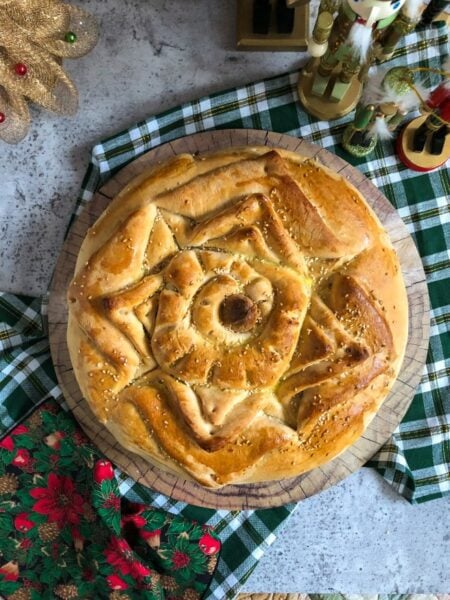
Christopsomo (Χριστόψωμο): Called Christ’s bread, this special loaf is delicious and full of symbolism.
Christmas koulourakia with yeast (Χριστουγεννιάτικα κουλουράκια με μαγιά) Amazing savoury bread koulourakia.
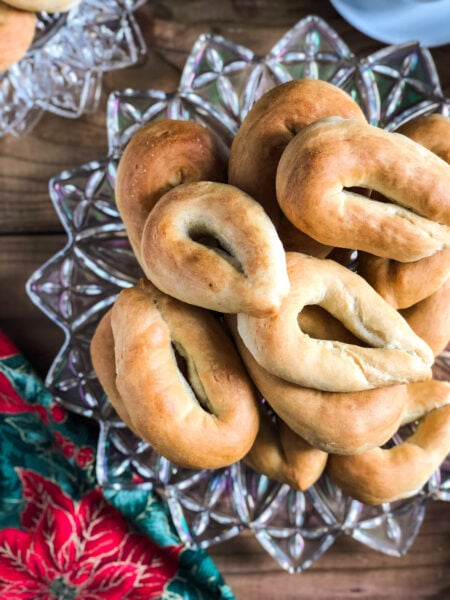
Lalagia (Λαλάγγια) Fried rings of dough! We love these on Christmas morning with a lot of feta

Vasilopita (Greek New Year’s Cake)
Ingredients
- 3 ½ cups sifted, all-purpose flour
- 2 teaspoons baking powder
- pinch of salt
- 1 cup unsalted butter, softened
- 2 cups white granulated sugar
- 6 large eggs
- 1 tbsp orange rind, tightly packed
- 1 teaspoon vanilla extract
- 2 tbsp cognac or brandy see notes (we use Metaxa)
- 1 cup milk
- 1/3 cup icing sugar for dusting the top of the vasilopita
Instructions
- Preheat oven to 350 degrees Fahrenheit. Set rack in middle.
- In a large bowl, combine the sifted flour, baking powder and salt. Mix together with a whisk or a fork. Set aside.3 ½ cups sifted, all-purpose flour, 2 teaspoons baking powder, pinch of salt
- In the bowl of an electric mixer, slowly and not higher than medium speed, cream together the butter and sugar. Beat until well combined and smooth, approximately 4-5 minutes.1 cup unsalted butter, softened, 2 cups white granulated sugar
- To the sugar and butter add the eggs, one at a time. Beat well after each egg is added. Then, add the orange rind, vanilla extract and cognac. Mix well.6 large eggs, 1 tbsp orange rind, tightly packed, 1 teaspoon vanilla extract, 2 tbsp cognac or brandy
- Slowly add one cup of the flour to the bowl of the electric mixer. Mix at low speed. Then, add the milk and the remaining flour. Mix well, over low speed to prevent too much splattering. When the ingredients have been combined, continue to mix gently for a another minute or two. Your batter should be smooth and without any lumps. See Recipe Note.1 cup milk
- Take a 10 inch round baking pan and grease the bottom and sides with a thin layer of vegetable oil. Line the bottom of the pan with parchment paper.
- Take a silver coin (usually a quarter) and wash it well. Dry the coin and then wrap it in securely in food grade plastic wrap or aluminum foil. Set aside.
- Pour the batter into the prepared cake pan. Smooth out the batter so it is spread evenly in the pan. Using a knife, make an indentation in the batter in order to make it easy for you to slip the coin in. Be sure that the coin does not poke out the top of the vasilopita batter. Smooth the top once again.
- Bake your vasilopita in the middle rack of your oven for approximately 60-70 minutes. You can check that it is done by inserting a clean toothpick into the center of the cake. If it comes out clean, with only crumbs attached to it (no wet batter), then your vasilopita is ready. Remember each oven is different, therefore, start checking your cake after 55 minutes to check for doneness.
- Allow to cool in the cake pan for about 5 minutes and then remove it from the pan and allow it to cool fully on a cake rack. Once it is fully cooled, sprinkle the top with some icing sugar, and serve.1/3 cup icing sugar
- Be mindful when serving the vasilopita to small children and the very elderly; the coin could be a choking hazard.
- Don't be alarmed if the cake cracks. This cake is similar to a traditional pound cake which almost always crack.
- Enjoy, and Happy New Year!
Just made it for tomorrow and it looks and smells great! Very easy recipe for a non-baker like me to follow! I sprinkled some crushed almonds on top halfway through baking because my yiayia used to do that. Unfortunately, I forgot to add Cognac to the batter 😬. I figure I’ll leave it out overnight covered with a tea towel, and sprinkle the powdered sugar on tomorrow morning.
Hi Zach!!! We are so happy that you tried our recipe and that you are excited to try it! Love that you made it your own by adding the crushed almonds. The cognac…no worries, it should still be great 😉 Happy New Year! Let us know how you like the cake when you try it (and please give the recipe a star rating! We truly appreciate that!) xoxo Helen & Billie
It was great – the whole family loved it!
So, so happy that everyone enjoyed the vasilopita! We are truly so happy that you tried our recipe! xoxo Helen & Billie
Love this recipe! I’m trying to keep my Yiayia’s memory alive through her Greek cooking, and this recipe reminds us all of her and is delicious! One question though: How do you keep the coin from sinking to the bottom? I remember my Yiayia’s coin was always in the middle of the cake slice. I’ve seen others insert the coin on the bottom after baking but that doesn’t seem right to me.
Thank you!
Hi Sara! We are thrilled that you love the recipe and that it brings back happy memories of your Yiayia! That truly means the world to us! Does your coin sink in our cake batter? It typically does not sink to the bottom. We wonder what coin do you use? Is it much heavier or larger than the Canadian quarter we typically use? We agree, inserting the coin after baking seems wrong :). xoxo Helen & Billie. Happy New Year!!!
Us again…would you mind giving the recipe a star rating? We truly appreciate it!
I have used and loved this recipe for a few years now. The past few years I have made cupcakes and smaller cakes to have at home and to give to neighbors. This year I only had time to make one Vasilopita for my family but only had smaller cake pans so I used a Bundt pan. It turned out pretty good and we are looking forward to enjoying it today. Happy New Year!!
Thank you Suzanna!! We truly appreciate you taking the time to comment and give our recipe a star rating. We are thrilled that you turn to our recipe, year after year. Thank you for making Mia Kouppa part of your New Year Celebration! All the best for 2026! xoxo Helen & Billie
Been making this for years – tried and tested recipe! Our kids’ favorite part of New Year’s!
You cannot imagine how happy this makes us, knowing that your children love this recipe! Thank you for sharing! xoxo Helen & Billie
Just made mine! Came out beautifully! So fluffy! Thanks again for a great recipie!
Thank you for taking the time to comment Tina! We truly appreciate that 🙂 So happy that you loved the recipe! Happy New Year! xoxo Helen & Billie
I use this recipe each year. I make a half recipe (only 3 of us) and a 9 inch pan and reduced the baking time by 10 minutes. Delicious 😋 Xronia Polla!
Hi Irene! Great adjustment to the cake! We are so thrilled that we have become part of your New Year celebration! So happy that we are your go-to vasilopita recipe! Thank you and Happy New Year! xoxo Helen & Billie
Recipe was easy to follow. Vasilopita was moist, not too sweet and the aromatics balanced perfectly. I added finely chopped walnuts and it worked well as an extra traditional touch. Everyone loved it!
Hi Irene! How wonderful! Love that you made it your own by adding the walnuts! We are thrilled that everyone loved the vasilopita! Happy New Year! xoxo Helen & Billie
This is the recipe that my family insists on that I use each year. Absolutely the most delicious , tender, and flavorful Vasilopita I’ve ever eaten.
Woo hoo!!! That is great to hear! We love your family 🙂 and love that they love our vasilopita recipe! Thank you for taking the time to comment. Happy New Year! xoxo Helen & Billie
I made my first ever Vasilopita using this recipe. It was PERFECT! A cross between a bread and a cake, not too sweet, and moist. The recipe called for 60-70 minutes baking time at 350°F, but mine was done at 50 minutes. This recipe will be my go-to recipe from now on. Thanks, Mia Kouppa!
yay!!! We are SO happy that you trusted our recipe, and thrilled that you loved it! Thanks so much for letting us know, and we are thrilled that we will now be part of your New Year celebrations! All the blessings for 2026! xoxo Helen & Billie
I made this yesterday for my moms name day and it was a great hit! The only change I made was replaced Metaxa with Aperol 🙂 . I will make this again. Thank you for sharing it
How wonderful! Xronia Polla to your mom! We are so happy that you gave our recipe a try and that you loved it! Happy New Year! Hope you continue to find much to love here with us! xoxo Helen & Billie
Xronia Polla to Billie!
Thank you so much!!!! xoxo Billie (and Helen 🙂 🙂
Used this recipe for the first time and it was a great success! It seemed that our tradition was to try a new recipe every year until we found the perfect one. Well, this puts an end to that as we have found our forever recipe! Yummy!! Thank you Mia Kouppa! 🙂
Wow!!!! That is amazing for us to know! Thank you so much for taking the time to comment! We are so happy that you tried our recipe, and thrilled that you loved it! Happy New Year! xoxo Helen & Billie
After a few years of trying to make vasiloppita I gave up…until this year when I searched the web for something new. I found your recipe! I made it and it was absolutely amazing! My family and I loved it!!
Thank you!
We are so happy that you looked again, and found our recipe 🙂 We are absolutely thrilled that you loved it!!!! Happy New Year, and we hope you continue to find much to love here with us! xoxo Helen & Billie
Made it and everyone enjoyed it a lot! The citrus flavor came through wonderfully, yes, I did use brandy. My niece’s husband found the coin!
How wonderful! We are thrilled that you all enjoyed the cake! Thank you for trying our recipe 🙂 Happy New Year xoxo Helen & Billie
Excellent recipe – reminds me of Yiayia’s
So happy to know that you loved it! Thank you and Happy New Year!!! xoxo Helen & Billie
Excellent recipe and simple. Thank you
Thank you for trying our recipe! We are so thrilled that you loved it! Happy New Year xoxo Helen & Billie
Delicious and comes out perfect every year!
Hi Evi! Thank you so much for taking the time to comment! We appreciate the feedback, and mostly, we are thrilled that you love our vasilopita recipe!!! Thank you for making Mia Kouppa part of your New Year celebration year after year!! Happy New Year! xoxo Helen & Billie